The marathon planner template is a downloadable, structured tool designed to guide your 12-week race preparation. This marathon training planner template helps runners organize workouts, track progress, and hit weekly goals with ease.
Whether you’re searching for a marathon training plan template, a free PDF version, or a printable schedule to follow, this template is built for both beginners and experienced runners. Start planning smarter with the PlanWiz planner app and stay on pace toward your race-day success.
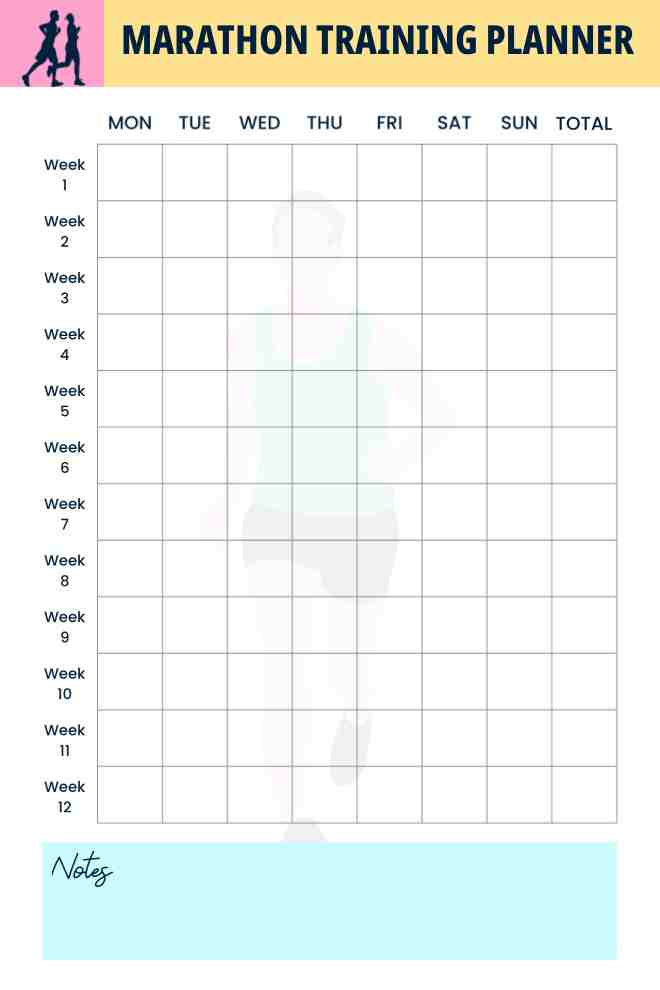
What Key Sections Are Included in This Marathon Training Planner Template?
The marathon training planner is a digital, customizable template designed to structure your training for race day. Available via the PlanWiz, it’s part of PlanWiz’s productivity suite, offering runners a clear roadmap to build stamina, improve speed, and prevent injuries. With its user-friendly design, the template integrates with the PlanWiz app, making it easy to track progress and adapt on the go.
Weekly Training Schedule
The planner features a grid layout to record training activities for each day of the week. Runners can:
- Plan their runs based on intensity and distance.
- Schedule rest days for recovery and injury prevention.
- Track cross-training sessions like strength training or yoga.
Total Weekly Mileage
A designated column allows runners to sum up their total distance covered each week. This helps in:
- Monitoring progress and consistency.
- Adjusting training intensity based on performance.
- Ensuring a gradual mileage increase for endurance building.
Notes Section
The notes section provides space for personalized tracking, allowing runners to:
- Log race day strategies and insights.
- Record any injuries, fatigue, or weather conditions.
- Reflect on strengths and areas for improvement.
This planner serves as an essential goal planner for structuring a well-balanced marathon training routine, ensuring runners stay committed and goal-oriented.
Who Should Use This Planner?
This Marathon Training Planner is perfect for anyone ready to take on a challenge and unlock their full potential. Whether you’re a first-time marathoner or a seasoned runner aiming for a personal best, this planner will help you stay organized, motivated, and focused every step of the way.
- Beginners looking for structure and confidence as they build endurance.
- Experienced runners striving to improve performance and track progress.
- Goal-setters who thrive with clear, visual planning and weekly accountability.
- Fitness enthusiasts who love the satisfaction of ticking off each completed run.
- Busy individuals wanting a simple, customizable way to fit training into daily life.
- Training partners or groups who want to stay on the same page and encourage one another.
No matter where you are in your running journey, this planner is your companion for success. Celebrate every mile, stay consistent, and reach your marathon goal with confidence!
Benefits of the Marathon Training Planner Template
This template transforms marathon prep into a structured, motivating process. Here’s why runners love it:
- Organized Training: Consolidates all runs, rest days, and cross-training into one digital tool, eliminating planning stress.
- Efficient Timeline: Perfect for runners with limited prep time or prior experience, packing effective training into 12 weeks.
- Motivational Tracking: Log daily runs and weekly progress in the app, celebrating milestones like a 15-mile long run.
- Flexible Adjustments: Customize workouts to fit work, travel, or unexpected setbacks, keeping you on track. You can also track your progress with a workout planner.
For example, if a busy week forces you to skip a Tuesday run, the planner lets you reschedule it for Thursday without losing momentum.
How to Use the Planner for Maximum Results
To make the most of the PlanWiz template, follow these steps for safe, effective training:
1. Set Your Starting Point
- Assess Fitness: Ensure you can run 5–10 miles and handle 15–20 miles weekly.
- Define Goals: Aim to finish, run without walking, or hit a time (e.g., sub-4:30). Use a goal planner template to refine your objectives.
- Example: If your longest run is 8 miles, you’re ready to start Week 1.
2. Follow the Weekly Schedule
The template provides a grid to plan daily activities. A sample week might look like this:
| Day | Activity | Notes |
|---|---|---|
| Monday | Rest | Stretch, foam roll |
| Tuesday | 5 miles (easy, 60–70% effort) | Conversational pace |
| Wednesday | 6 miles (tempo, 80% effort) | Sustain a comfortable hard pace |
| Thursday | 4 miles (easy) | Recovery pace |
| Friday | Rest or cross-training | 30-minute yoga or cycling |
| Saturday | 14 miles (long run, slow) | 1–2 min/mile slower than race pace |
| Sunday | 3 miles (recovery) | Very easy pace |
- Mileage Increases: Aim for 10–15% weekly growth (e.g., 20 miles in Week 1 to 40 miles by Week 8).
- Long Runs: Build from 10–12 miles in Week 1 to 18–20 miles by Week 8–10, mimicking race-day endurance.
3. Incorporate Workout Variety
The template mentions speed training, endurance runs, and cross-training, but may lack specific guidance. Add these to balance your plan:
- Easy Runs: 1–2 per week at conversational pace to build aerobic base.
- Speed Work: 1 per week, e.g., 4x800m at 5K pace with 2-min recovery or 5 miles at tempo pace.
- Hill Workouts: 1 every 2 weeks to boost strength (e.g., 6×1-min hill repeats).
- Cross-Training: 1–2 sessions/week (e.g., swimming, strength training) to reduce impact.
- Long Runs: Slow and steady, practicing race-day pacing and nutrition.
Use a running watch or app (e.g., Strava, Garmin) to monitor effort and pace.
4. Prioritize Recovery
Recovery is critical, and the template may not emphasize it enough. Ensure:
- Rest Days: 1–2 per week (e.g., Monday, Friday) for muscle repair.
- Step-Back Weeks: Reduce mileage by 20–30% every 3–4 weeks (e.g., Week 4: 30 miles instead of 40).
- Taper Period: Cut mileage in Weeks 11–12 (e.g., 60% of peak in Week 11, 40% in Week 12) to feel fresh for race day.
5. Track and Reflect
- Log Details: Use the notes section to record pace, hydration, nutrition, or how you felt (e.g., “Knee felt tight, iced after”).
- Adjust as Needed: Modify for fatigue, minor injuries, or life events, but prioritize long runs.
- Example: If a 16-mile run feels brutal, note it and reduce the next week’s intensity.
By using this marathon training planner template, runners can balance their training plan with time-saving strategies, train smarter, stay motivated, and cross the finish line feeling strong and accomplished!
Enhancing the Template: Addressing Gaps
The PlanWiz template is a strong foundation, but here’s how to fix potential weaknesses:
- Audience Clarity: It’s not for beginners, so confirm your readiness or opt for a longer plan if new to running.
- Mileage Progression: If the plan ramps up too fast (e.g., 10-mile to 18-mile long runs in 3 weeks), slow it to 1–2 miles per week to avoid overuse injuries.
- Recovery Emphasis: Add rest days and tapering if the template skimps (see above).
- Workout Specificity: Supplement vague mileage goals with structured workouts (e.g., “6 miles” becomes “6 miles with 3 miles at tempo pace”).
- Holistic Preparation:
- Nutrition: Test race-day fueling (e.g., gels every 45 minutes on long runs) and hydrate consistently (8–10 oz water/hour). Track with a health planner template.
- Injury Prevention: Stretch daily (e.g., calf stretches), foam roll, and strengthen core/glutes 1–2 times/week.
- Mental 1-2 cross-training sessions/week (e.g., yoga, cycling) to support running.
These tweaks ensure a safer, more effective plan.
Tips for Marathon Success
Beyond the planner, these strategies will boost your race-day performance:
Conclusion
The 12-week marathon training planner template is a must-have for intermediate runners ready to tackle 26.2 miles. It’s customizable, digital design simplifies planning, boosts motivation, and ensures balanced training.
By adding recovery, specific workouts, and holistic prep, you’ll hit the finish line strong. Marathons demand effort, but with this planner and resilience, you’re set for success. Download the template from PlanWiz or the app today, and take your first step toward marathon glory. Happy running!
FAQs
Use the notes section to write affirmations, visualize race day, and set weekly goals to build confidence and mental strength.
Use the mileage tracker and notes to monitor distance, pace, and performance, adjusting your training as needed.
Log pace, feelings, hydration, nutrition, injuries, and weather to identify patterns and optimize your training.
It structures your training with run schedules, rest days, and cross-training to build endurance and keep you focused.
It’s ideal for intermediate runners running 15–25 miles per week or those comfortable with 5–10 mile runs, not complete beginners.