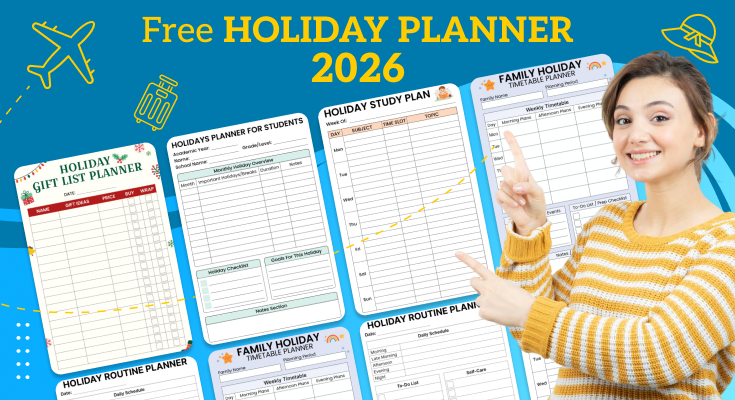
The holiday periods should be a time of rest, recreation, and self-actualization and must never become a period of chaos and last-minute activity.” The significance of a holiday planner is to ensure that students, parents, and family members are organized during holiday periods. A holiday planner may be a student during holidays, a parent with both business and holiday schedules to manage, or an employee with family members during holiday periods. “The holiday periods can be chaotic or fun, depending upon who has the holiday planner.
With this guide, you now have everything you need to organize holidays in schools. In fact, the holiday guide comes with free templates so that even an individual who has fallen behind in fun-packed holidays will never be left behind.
Why School Holidays Are So Stressful For Students and Parents?
School holidays compress weeks of holiday time into a space where “all routine flies out of the window in the blink of an eye.” The children have a structured environment of schedules from the onset of absolute freedom, where parents are struggling between taking care of children and arriving at their place of employment, and then attempting a level of education and rest-related activities.
Recent studies present disturbing trends in school vacations. Students not participating in some structured activities during holidays can lose one month’s equivalent of instruction. While 90% of parents report feeling stressed to keep children engaged and balance work commitments with extended breaks.
The core challenges break down like this:
| Challenge | Root Cause | Impact on Families |
|---|---|---|
| Loss of Routine | No school schedule to anchor the day | Disrupted sleep patterns, poor time management |
| Productivity vs. Rest Balance | Unclear expectations about study time | Academic guilt or complete disengagement |
| Unstructured Time | Days feel aimless without planning | Boredom, excessive screen time |
| Budget Pressure | Activities and childcare costs add up | Financial stress, limited options |
| Work-Life Conflict | Parents still working while kids are home | Supervision challenges, safety concerns |
“Complete rest” and “productiveness” are the two ends of a continuum between which lies the area of tension. Students wish to rest, parents wish for their children to advance academically, and no person has a strategy for both. Using daily planner templates can help families establish a flexible routine that balances rest with productive activities during school breaks.
Knowing what to expect is an important step in planning a holiday that could be really effective. Family planner templates provide an excellent solution for coordinating schedules and managing both parents’ work commitments and children’s activities throughout the break.
What Components Should a Student Holiday Planner Include?
There is more to a good holiday organizer or planner used by students than a typical organizer or planner. This organizer or planner has a special system.
Core Planning Elements
Daily Routine Structure: Try to maintain as much routine as possible, even without school. These should include times for wake-up, meals, studying periods, activity times, and times for sleep to avoid the disorder of sleep times that makes it hard to come back to school.
Weekly Timetable: Weekly timetable with activities, appointments, and family obligations, and study time assigned to ensure a good routine without being too rigid about time.
Academic Planning Sections
- Homework Tracker: Assignments that are due after the break, and their status
- Study Schedule: Plan-specific times for reviewing and reading to keep in the lead
- Academic Year Planning: Look ahead at the courses for the coming year, lay out plans for the classroom materials, and set goals for the semester
Gift and Shopping Lists. When holidays are approaching, occasions of celebration, one can monitor gifts to be given, gift budgets, as well as gifts bought, to prevent last-minute rushes and overspending on gifts.
Meal Planning With ever-changing family patterns, meal planning can get rid of the “what’s for lunch?” dilemma, answered 50 times a day. Include recipes for kids to make. Meal planner templates simplify the daily food planning challenge and can even involve children in the preparation process.
Budget Management Track holiday expenses in relation to activities, events, materials, and entertainment.
Family Coordination. What might happen when there are several members with different schedules? Having a family calendar might assist in eliminating conflicts by reminding all members of the daily routine.
Available Planner Formats
| Format Type | Best For | Advantages |
|---|---|---|
| Digital Apps | Tech-savvy students shared family access | Easy updates, reminders, shareable |
| Printable Templates | Visual learners, those who prefer paper | Tangible, no device needed, customizable |
| Physical Planners | Students who like writing things down | Portable, satisfying to check off tasks |
| Wall Charts | Families, younger children | Visible to everyone, collaborative planning |
The best format depends on your personal style and family needs. Many families use a combinationof digital for sharing, and printable for individual student tracking.
How Should Students Balance Productivity and Rest During School Holidays?
This is perhaps the most critical question for successful holiday planning. Too much structure feels like school never ended; too little leads to wasted time and back-to-school struggles.
The 60-40 Productivity Framework
Research on student well-being during breaks suggests an effective balance:
60% Rest & Recreation
- Unstructured free time for creativity and play
- Physical activities and outdoor time
- Social connections with friends and family
- Hobbies and personal interests
- Adequate sleep (critical for adolescent development)
40% Productive Activities
- Homework completion and study review
- Reading (recreational and academic)
- Skill development (languages, instruments, coding)
- Part-time work or volunteering
- College prep or career exploration
Weekly Structure That Works
A week with a simple structure ensures that there’s a balance brought to the holiday. It prevents the holiday from feeling as if it’s very structured and planned. Having a healthy routine that ensures there’s productivity, rest, and fun in a separate setting brings refreshment and relief to students during their holiday. When students can separate the day into blocks, they can stay on a routine while enjoying their holiday.
Sample Productive Holiday Week Schedule:
- Wake up at a consistent time
- Breakfast and morning routine
- 2-hour focused study or work block
- Short movement or stretch break
- Lunch and rest
- Outdoor or physical activity
- Creative or social time
- Unstructured free time
- Family dinner
- Light chores or meal prep
- Relaxing low-energy activities
- Consistent bedtime routine
Flexible Daily Routine Guidelines:
- Early Risers (Elementary Students): 2 hours of structured activities, rest flexible
- Middle Schoolers: 3 hours productive time, afternoons for activities/friends
- High Schoolers: 4 hours study/work, complete schedule autonomy with accountability. Study planner templates can help high schoolers organize their academic goals while maintaining flexibility for rest and social activities.
- College Students: Self-directed balance with specific goals for the break period
What Are the Biggest Student Holiday Planning Mistakes?
Learning from common pitfalls saves time, prevents stress, and protects academic progress during breaks.
Critical Mistakes Students Make
1. Complete Disengagement from Learning
- ❌ Problem: Ignoring all schoolwork creates anxiety and learning loss
- ✅ Solution: Schedule 30-60 minutes daily for light reading or review
2. Leaving All Homework Until the Last Week
- ❌ Problem: Overwhelming workload ruins the final week of break
- ✅ Solution: Complete assignments in the first two weeks, enjoy the remaining time guilt-free
3. Abandoning All Routine
- ❌ Problem: Sleeping until noon daily makes school return brutal
- ✅ Solution: Wake within 1-2 hours of normal school time
4. Over-Scheduling Every Single Day
- ❌ Problem: Exhaustion and burnout from too many activities
- ✅ Solution: Plan 3-4 structured activities per week, leave the rest flexible
5. Ignoring Physical Health
- ❌ Problem: Poor eating, no exercise, excessive screen time
- ✅ Solution: Maintain basic health habits throughout the school year
Common Family Planning Errors
| Mistake | Better Approach |
|---|---|
| No Plan at All | Create a basic weekly structure first day of holidays |
| Unrealistic Expectations | Balance Pinterest-perfect plans with realistic execution |
| Forgetting to Budget | Set spending limit before holidays begin |
| Not Involving Kids in Planning | Collaborative planning increases buy-in and enthusiasm |
| Overly Rigid Scheduling | Build flexibility for spontaneous opportunities |
The Hidden Mistake: Not Planning for Re-Entry
Many families plan the break perfectly, but forget to prepare for the school return. Start transitioning back to the school routine 3-5 days before classes resume:
- Gradually adjust sleep schedule
- Review school supply needs
- Check and complete any forgotten assignments
- Organize workspace and materials
- Mentally prepare for the semester ahead
How Do You Create an Effective Daily Holiday Routine?
Daily routines during holidays should provide structure without feeling rigid or institutional. The goal is to create anchors that organize the day while preserving freedom and fun.
Building Your Daily Routine
Step 1: Identify Non-Negotiables
What must happen every day, regardless of circumstances?
- Wake time and bedtime (withina reasonable range)
- Three meals at approximately the same times
- Basic hygiene and self-care
- Required chores or responsibilities
- Any scheduled commitments (work, activities)
Step 2: Add Productive Time Blocks
Productive activities shouldn’t consume the entire day, but should happen consistently to maintain skills and prevent overwhelm later.
Morning Productivity Block (90-120 minutes):
- Homework assignments
- Academic review or reading
- Learning new skills
- Part-time work or volunteering
Why mornings? Energy levels are highest, gets “work” done early, frees afternoon for guilt-free fun.
Step 3: Build in Physical Activity
Physical activities during breaks not only promote well-being but also help students connect with nature and provide a change of scenery from typical routines.
Daily movement options:
- Outdoor play or sports
- Bike rides or walks
- Swimming or active games
- Family hikes or park visits
- Dance, yoga, or workout videos
Step 4: Schedule Unstructured Time
This is crucial. Downtime should be intentionally planned, not just what’s left over. Unstructured time allows for:
- Creative play and imagination
- Processing experiences and emotions
- Development of independence
- Boredom (which sparks creativity)
- Self-directed exploration
Step 5: Create Evening Routine
Maintain school-year bedtime routines. Weekly planner templates can help families coordinate evening activities and ensure everyone maintains consistent bedtimes throughout the holiday period.
- Family dinner together when possible
- Wind-down activities (reading, quiet games)
- Limit screens 1 hour before bed
- Consistent sleep time (even weekends)
How Can Students Plan Homework and Study During School Holidays?
Academic work during holidays creates stress when unplanned, but provides valuable review when approached strategically.
Holiday Homework Planning System
Week 1 Assessment:
Within the first 3 days of the holidays, complete this assessment:
| Task | Action |
|---|---|
| List All Assignments | Write every homework task, reading, and project due after the break |
| Estimate Time Required | Be realistic about how long each will take |
| Check Deadlines | Note exact due dates and any early submissions |
| Prioritize by Urgency | Rank assignments by due date and difficulty |
| Identify Resources Needed | List books, materials, and internet research required |
Week-by-Week Distribution:
Don’t save everything for the end. Distribute work across the break. Monthly schedule planner templates allow students to map out their entire holiday break and distribute homework evenly, preventing last-minute panic.
For 2-Week Breaks:
- Week 1: Complete 70% of assignments
- Week 2: Finish the remaining 30%, review, and organize
For 4-6 Week Breaks:
- Weeks 1-2: Tackle most challenging or lengthy assignments (40%)
- Week 3: Complete medium-difficulty work (30%)
- Week 4: Finish easier assignments and review (20%)
- Final Week: Buffer for any incomplete work, prepare for school return (10%)
Daily Study Blocks:
Schedule consistent study time, even if brief. A study schedule maker helps students establish dedicated learning blocks while maintaining flexibility for holiday activities and rest.
- Elementary: 30-45 minutes daily
- Middle School: 60-90 minutes daily
- High School: 90-120 minutes daily
- College: 2-4 hours daily (varies by course load)
How Do Families Create Effective Weekly Timetables for School Holidays?
Family holiday timetables coordinate everyone’s schedules, balance structure with flexibility, and prevent the daily “what are we doing today?” stress.
Building Your Weekly Timetable
Phase 1: Identify Fixed Commitments
Before filling in activities, mark non-negotiable items:
- Parent work schedules
- Childcare arrangements
- Scheduled camps or programs
- Appointments (medical, dental)
- Travel dates
- Pre-planned activities or events
Phase 2: Establish Weekly Rhythm
Create a routine that limits screen time and encourages outdoor play, new experiences, and continued learning. Weekly schedule maker provides the framework for establishing a consistent rhythm while accommodating each family member’s needs and commitments.
Themed Day Approach (Works Well for Younger Children):
- Monday: Activity Day (outings, trips, adventures)
- Tuesday: Creative Day (crafts, art, building projects)
- Wednesday: Learning Day (museum, library, educational activities)
- Thursday: Active Day (sports, swimming, outdoor play)
- Friday: Social Day (playdates, friends, community events)
- Weekend: Family Time (flexible, spontaneous activities)
Flexible Structure Approach (Better for Older Students):
- 2-3 structured activities per week (camps, lessons, volunteer work)
- 2-3 academic blocks per week (homework, reading, skill development)
- Daily physical activity (sports, exercise, outdoor play)
- Remainder flexible for rest, hobbies, social time
Phase 3: Schedule Variety and Balance
Ensure your weekly timetable includes:
| Category | Examples | Weekly Goal |
|---|---|---|
| Physical Activities | Sports, swimming, biking, hiking | 5-7 days |
| Creative Time | Arts, crafts, music, and building | 3-4 days |
| Learning Activities | Reading, museums, educational projects | 3-5 days |
| Social Connections | Friends, playdates, family outings | 2-3 days |
| Independent Play | Unstructured exploration | Daily |
| Family Bonding | Meals together, games, conversations | Daily |
Phase 4: Build in Flexibility
Be flexible and prepared for the unexpected during school holidays. Allow for spontaneity and flexibility with your plans.
Flexibility Strategies:
- Leave 2-3 days per week completely unscheduled
- Create “Plan B” options for bad weather
- Use “TBD” placeholders for spontaneous decisions
- Build buffer time around scheduled activities
- Don’t over-pack days; less is often more
What Budget Management Strategies Workfor School Holiday Planning?
Holiday spending quickly spirals without careful planning. Activities, childcare, entertainment, and supplies add up faster than expected, creating financial stress that extends beyond the break.
Holiday Budget Planning Process
Step 1: Calculate Your Total Available Budget
Be realistic about what you can afford to spend during the break without creating financial hardship.
Consider:
- Reduced work hours (if taking time off)
- Childcare costs if working
- Normal monthly expenses continuing
- Savings goals you want to maintain
Step 2: Break Budget Into Categories
Recommended Holiday Budget Allocation:
| Category | Percentage | Purpose |
|---|---|---|
| Childcare/Camps | 35-40% | Supervision when parents work |
| Activities/Outings | 25-30% | Entertainment, attractions, events |
| Supplies/Equipment | 10-15% | Craft materials, sports gear, books |
| Food/Treats | 15-20% | Special meals, outings, snacks |
| Gifts (if applicable) | 5-10% | Birthday parties, celebrations |
| Emergency Buffer | 10% | Unexpected costs, opportunities |
Step 3: Track Every Expense
Use tracking methods that match your style. Budget planner templates help families monitor holiday spending in real-time, preventing overspending and ensuring funds are allocated according to priorities.
- Digital: Budgeting apps, spreadsheets, banking apps
- Physical: Envelope method with cash
- Hybrid: App for tracking, cash for day-to-day
What Are the Best Holiday Planner Templates and Tools?
A good holiday planner template can turn messy holidays into well-structured and enjoyable holidays for everyone in your family. Whether you are interested in computer-based planners that allow synchronization across different devices or physical planners that can be filled out by hand, it really does help to have a tool specifically designed for holiday planning at your disposal. The really good planner templates are ones that are useful and look good to help make holiday planning less of a burden.
You can find eight wonderfully designed holiday planner templates below, each of which has been made for a specific purpose in holiday planning. From budgeting for gifts to creating a schedule for students regarding their homework, every holiday-planning need has been taken into account. The description below each template will tell you what the template is all about and who needs this template.
Template #1: Holiday Seasonal Gift List Planner
This functional gift organizer allows you to handle all gift purchasing throughout the entire season in one beautiful location. This template has cute gifts such as Christmas lighting strings, candy canes, holly, and snowmen throughout the borders. You can use the form to list each individual’s name, a list of gifts to purchase, assign a cost to each gift, and mark them off as they are bought and wrapped. This red header is easy to read since all the columns are distinct. There are so many rows in this header that you can use to track gifts throughout your entire list.
Best For: All those who celebrate holidays and wish to be organized, on budget, and make sure that nobody goes unnoticed during this festive time.

Template #2: Daily Holiday Routine and Meal Plan Planner
It will help you manage your activities in the season and your need for rest. The daily planner is designed with five portions in your day, from morning to night. You can write your activities, occurrences, or just need rest. You will find room for your tasks and your needed rest side by side, reminding you of their importance. Space is provided for fun activities, relaxation, and noting things you’re grateful for. You can also organize your meals, including lunch and dinner, all in one place. Finally, there’s a dedicated section for tracking daily holiday expenses, along with room for your thoughts and reflections.
Best For: All individuals who feel stressed out during the holiday season and could benefit from help staying on track with a routine.

Template #3: Student Academic Year Holiday Planner Template
This academic holiday organizer allows you to make the most out of your holiday time. At the top, you write down your name, school, and other details. The holiday organizer page helps you note all the holidays, their duration, and important homework details. When you have tasks to complete during the break, the holiday TO-DO page keeps everything organized in one place. To make your holiday time more meaningful, the holiday goals page lets you write down all the things you want to achieve and enjoy during the holidays. The large note page at the bottom allows you to note down holiday activities, deadlines, or reminders about school.
Best For: Middle and high school students, and also college students, who want to plot out their breaks and vacation days and work towards a goal of having their vacation time be truly productive.

Template #4: Family Holiday Weekly Timetable Planner
This colorful family planner is filled with fun and expressive patterns like stars and rainbows to make planning fun. To make your family planner, starting from scratch, you need to write down your family name and the period of planning at the top portion. Weekly planners also give you space to have an overview of an entire week. It is designed in columns to allocate space for each day’s morning activities, afternoon activities, and evening activities. That begins from Monday to Sunday. It is designed in such an easy manner that it allows easy synchronization of family members’ activities. That prevents you from programming two different activities in one single timing. That also includes space to write down the activities, along with space to write down activities to be performed.
Best For: Families who have a lot of different schedules that need to be coordinated, such as during holidays, visits with relatives, or while children are out of school.

Template #5: Comprehensive Holiday Spending and Shopping Tracker
This financial planner helps you manage your holiday budget without going overboard. Set spending limits at the top for your holiday budget, gift budget, food budget, decor and events, and miscellaneous expenses. The gift tracker table below has columns for the recipient, gift idea, budget, actual amount spent, and a purchased checkbox. On the right-hand side, there is a shopping and miscellaneous tracker where you can log each purchase with estimated versus actual costs. At the bottom, the spending summary will capture how much you have budgeted altogether, how much you’ve spent in total, and what the remaining balance is. The section allows space to make notes on upcoming sales and payment due dates.
Best For: Budget-conscious buyers, the person who tries to avoid holiday debt, or just the individual who is interested in keeping a record of all the holiday expenses.

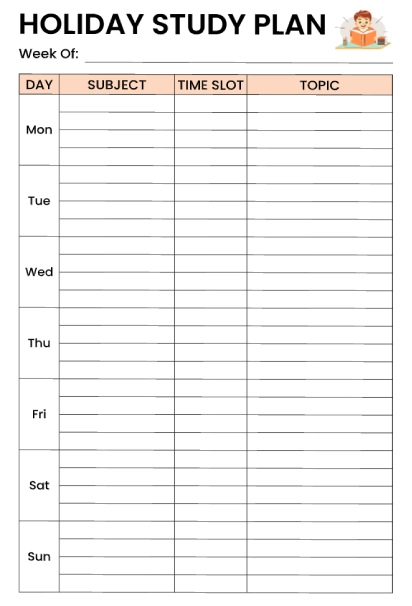
Template #6: Weekly Holiday Study Schedule Planner
With this basic study planner template, students have the ability to manage their studies, irrespective of whether it is during holidays. Initially, the students will be required to fill in their week of attendance on top of the template. Later, the students will employ the template to plan their studies on a daily basis. Each day of the template is illustrated with numerous rows, thereby allowing students to plan their studies in different sessions of the day. The columns of the template will allow students to record the subject they must study, the slot in which they will utilize the subject, and the topic they should address during their subject matter. The template will enable students to remain on track regarding their plans and objectives. The addition of a small cartoon of a student reading books brings some warmth to the template.
Best For: Exam periods following the holiday, or as a means for students to get back on track if they have been missing any assignments.
Template #7: Student Weekly Holiday Homework to Do Planner
Structure your holiday homework assignments by day and priority with this colorful homework planner. The columns include name, week, subject, homework description, due date, priority, and done. Since there are six days, Saturday to Monday, each gets a separate row. Scanning is easy because each column has a different brilliant color: blue for subject, green for homework, yellow for due date, peach for priority, and pink for done. The large notes field provided at the bottom allows you to enter all additional details related to homework.
Best For: Students who find themselves with multiple tasks to complete during their holiday break and want to ensure they organize their work in such a way as not forget anything when school starts up again.

Template #8: Comprehensive Holiday Budget Management Planner
This detailed budgetary organizer has categorized holiday expenses into six major heads to help you plan for all kinds of expenses. It has sections for gifts, packaging costs, traveling, meals during the holidays, entertainment, and other expenses. All the sections have columns for budget and actual spending, with rows for total spending that would automatically help you with calculations for the category of expenses. You are able to input your total budget and view total actual spending on all the categories above. The color of this organizer is beige and white, with clear headings that help you easily alternate between the various expense heads. There’s an area used to jot down reminders about payments and expenses to be made that are noted at the bottom of the organizer.
Best For: Detailed planners and families who want complete visibility into all of their holiday expenses in multiple categories.

Digital Planning Tools
| Tool Type | Free Options | Best For |
|---|---|---|
| Calendar Apps | Google Calendar, Apple Calendar | Shared family schedules |
| Task Management | Todoist, Microsoft To Do, Planwiz | Homework tracking |
| Budget Tracking | Mint, YNAB (trial), Spreadsheets | Expense monitoring |
| Note-Taking | Notion, Evernote, OneNote, Planwiz | Comprehensive planning hub |
| Habit Tracking | Habitica, Streaks | Daily routine consistency |
| Template-Based Planning | PlanWiz | Customizable templates for scheduling |
Frequently Asked Questions
You should start making arrangements 2-3 weeks before the school break. At this time, you would be able to make lists of homework, activities, budget planning, and camps to be attended. For summer vacations, arrangements should be made 4-6 weeks prior to popular activities.
Spend 60% of holiday time on rest and recreation (play, hobbies, sleep, activities) and 40% on productive tasks (homework, reading, skill development). This typically means 2-3 hours of productive work in the morning, followed by 4-6 hours of free time.
Engage them in the process, give them choices, accommodate the roads they take, and the time they need to spend sleeping. Ensure they are up and about between 9 and 10 am and set bedtimes. Set effective working hours when they are full of energy, and then let the system manage them. Weekly review instead of daily surveillance.
Yes. Templates reduce mental workload, establish accountability, shut out forgotten tasks, eliminate decision fatigue, and facilitate communication. In fact, “families who use planning templates experience a reduction of 40 to 50 percent in holiday-related stress.” Choose the type of template that fits your personality: online, printable, and combination.
Create shared digital calendars, group chats for coordination, and pre-holiday planning meetings with other families. These could involve exchanging weekly schedules and using shared spreadsheets for availability. In that way, it will eliminate conflicts and allow cost-sharing for group activities.
Final Thoughts
School holidays don’t have to be stressful. With the right planning approach, they can become exactly what they’re meant to be: a time for rest, growth, and family connection.
The key takeaways:
- Start planning 2-3 weeks before the break begins
- Use the 60-40 rule to balance rest with productivity
- Involve your children in the planning process
- Choose templates and tools that match your family’s style
- Stay flexible and adjust plans when needed
Remember, perfect planning isn’t the goal. A sustainable routine that reduces stress while creating meaningful memories is what matters most.
Download your free holiday planner templates or tools today and transform your next school break from chaotic to calm. Your future self will thank you when the holidays arrive, and you’re prepared, organized, and ready to enjoy quality time with your family.