Old frozen meals left lingering in the fridge, expired ingredients shoved away in the back of the pantry, and indulging in multiple versions of items you already have on hand that costs families and individuals hundreds of dollars a year, thanks to poor management of your freezer. The solution to your problems is a household freezer inventory tracking planner because, with one, you will have an organized system to catalog each and every item you have, as well as the ability to check your inventory with ease. Planwiz presents to you a useful and easy-to-use template to assist you.
This is the kind of simple and practical planner that will help keep your grocery costs low, your weekly meal planning simple, and your food waste minimal. This template is suitable for any freezer size and any lifestyle, small apartment freezer and small family, or large chest freezer and large family. Keep this posted on your fridge and always know what you have available before your next grocery run or next dinner choice.
What is a Household Freezer Inventory Tracking Planner?
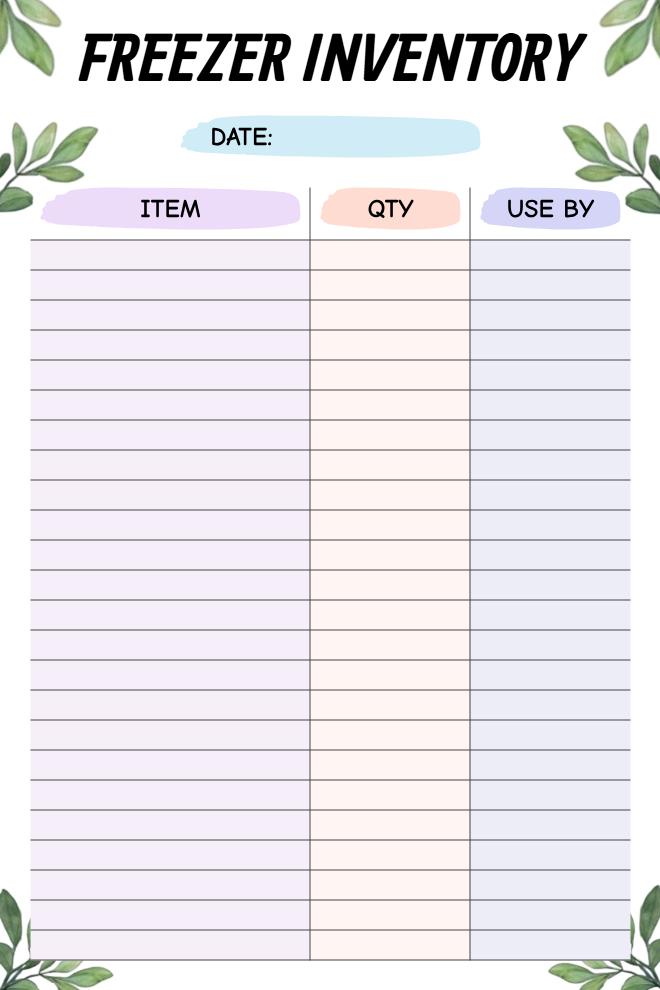
The Household Freezer Inventory Tracking Planner is basically a great organizing aid to help you write down and keep track of all the stuff in your freezer. The planner has a neat and very straightforward layout that allows you to easily jot down the names of the food, the amount, and the expiry date so that you are always aware of the contents of your freezer. Operating this tracking method will always remind you of the food you have stored in your freezer.
The planner acts as your freezer’s memory, helping you make informed decisions about what to cook, what needs to be used soon, and what you already have before shopping. It’s particularly valuable for families who buy in bulk, meal preppers who batch-cook on weekends, and anyone looking to reduce monthly food waste while staying within their grocery budget pair it with meal planner templates for even better kitchen organization.
What Tips Work Best with a Household Freezer Inventory Tracking Planner?
An organized freezer, together with the household freezer inventory tracking planner, turns disorganized frozen food storage into an optimized storage system. This useful approach helps to maximize space, ensure food quality, and locate the food efficiently.
How Should I Organize Different Freezer Zones?
Top Shelf/Basket Strategy
Store frequently used items like bread, frozen vegetables, and quick-grab snacks in the most accessible area. These everyday essentials should never require digging through other food.
Keep ice cream and ready-to-eat items here for easy family access. Label this zone as “Daily Use” on your freezer inventory tracking planner.
Middle Section Organization
Reserve middle shelves for proteins like chicken, fish, and ground meat that you use for weekly meal planning. Arrange packages flat and stack them vertically like files for easy visibility.
Use labeled bins or baskets as a visual guide or reference to group similar items together, just as you group different types of expenses in budget planner templates. It is easy and fast to organize your stock if you just label the bins with categories such as “Beef, ” “Poultry, ” and “Seafood.”
Bottom Drawer/Deep Storage
Place bulk purchases, long-term storage items, and ingredients for special occasions in the least accessible area. These items need less frequent access but benefit from the coldest temperature zone.
Store backup ingredients and sale purchases here, and track bulk shopping trips in monthly schedule planner templates to coordinate inventory reviews with shopping cycles. Update your freezer inventory tracking template to prioritize these items when planning future meals.
What Containers Work Best for Freezer Storage?
| Storage Method | Best For | Freezer Life |
|---|---|---|
| Vacuum-sealed bags | Raw meat, fish | Maximum (prevents freezer burn) |
| Rigid containers | Soups, sauces, liquids | 2-3 months |
| Freezer bags (heavy-duty) | Vegetables, fruits, bread | 6-12 months |
| Aluminum foil wrap | Baked goods, casseroles | 3-6 months |
Golden Rule: Remove as much air as possible from all packaging to prevent freezer burn and extend storage life.
How Do I Label Frozen Foods Effectively?
Essential Label Information
Write three details on every package: contents name, quantity/servings, and date frozen. Use permanent markers or freezer labels that won’t peel off in cold temperatures.
Add cooking notes when helpful: “marinated,” “pre-cooked,” or “add 5 minutes to cooking time,” and keep recipe journal templates nearby to record your favorite freezer-friendly meals. These reminders make meal prep easier when you reference your freezer inventory template.
Date Format Consistency
Always use the same date format: MM/DD/YYYY or DD/MM/YYYY. Consistency prevents confusion when checking expiration dates on your inventory list.
Include the “use by” date based on food type. Ground meat gets 3-4 months, chicken 9 months, vegetables 12 months from freezing date.
What Temperature Should My Freezer Be Set At?
Optimal Temperature: Keep your freezer at 0°F (-18°C) or below for food safety and quality preservation.
Monthly Maintenance Checklist:
- Check door seals for proper closure
- Defrost manual-defrost freezers when ice exceeds 1/4 inch
- Wipe up spills immediately to prevent ice buildup
- Rotate items using FIFO method (First In, First Out)
How Can I Maximize Freezer Space?
Freezer bags: should be used for pouring soups, sauces, and liquids into them, freezing the bag laying flat, then standing them upright (like books) once frozen. This method triple’s your storage capacity.
Square over round containers: Rectangular containers eradicate wasting space completely and stack more efficiently compared to round tubs.
Basket dividers: Small bins create separated areas in drawers, so tiny items cannot become buried and lost.
Which Foods Should Never Be Frozen?
❌ Avoid freezing these items:
- Whole eggs in shells (they expand and crack)
- High-water vegetables like lettuce, cucumbers, radishes
- Cream-based sauces (they separate when thawed)
- Soft cheeses like cottage cheese or ricotta
- Fried foods (they become soggy)
Document these restrictions in notes on your freezer inventory list to avoid mistakes during bulk shopping.
Quick Organizing Solution: The 15-Minute Freezer Clean
1 to 5 Minutes : Throw away all expired products and all products with extreme “freezer burn” damage.
6-10 Minutes: Remove dust from shelves, categorize items, and put similar items together.
11-15 Minutes: Organize your household freezer contents and update yourfreezer organization template, then put your organized items back in their zones.
This should be done every month in order to ensure that you have a system that saves you time, money, and also avoids wastage of food.
Frequently Asked Questions
A freezer inventory tracking planner helps you manage all the frozen foods in your freezer by providing you with a systematic means to list down all the items you need to track and allowing you to monitor them as you need to.
This planner really helps you to ensure that the things which you forget about don’t reach the point where they need to be thrown away because they are expired, and this planner also helps you to plan your meals very conveniently.
This planner helps you to locate the ingredients that you own without rummaging through the freezer.
This system can work adequately regardless of the size of the freezer that you are using, be it the apartment-type freezer or the chest freezer.
A household freezer inventory tracking planner helps you to cut down on expenses by minimizing the possibility of buying items twice and by reducing the wastage of food items. When you are aware of the contents of your freezer, you do not buy items twice and you consume the items before their expiry date.
This planner makes planning your weekly meals even simpler considering that you can view the available ingredients. This planner is an effective way to remove the frustration associated with realizing the ingredients are expired. This makes your kitchen operations even smoother.
A household freezer inventory planner helps you see all the items you are storing in your freezer and ensures that you never forget any items in the back of your freezer because all the items are right in front of you with their usage dates.
By checking your organizers, you can prioritize the products with expiration dates close by as you plan your meals. By doing so, you will be able to significantly reduce the quantity of food that you discard.
When you record every frozen item, you are less liable to just throw good money after bad, so to speak, by allowing perfectly good food to go to waste. Simply writing down in bullet journal templates to make you more mindful of what you have, just as it does to track your progress.
Obtain the freezer contents inventory tracker and begin an audit of the current frozen food products.
Check the shelves and the compartments and list the name, quantity, and date of expiration for all the frozen food items in the freezer.
As soon as your initial inventory is done, put your planner up in an easy, to, reach place in your fridge or one of your kitchen cabinets. Whenever you bring home new stuff from the grocery store or use an item from your stock, update it immediately.
Note three pieces of important information for each item of frozen food: the food item itself (for instance, “ground beef” and “frozen broccoli”), the quantity of the item (for instance, “2 lbs” and “3 bags”), and the “use by” date or the “frozen” date. The three basics will enable you to record efficiently.
For the larger freezers, you may want to add a “location” feature, which lists where each item is located. You may also want to use the storage for prep ideas or meals so you can make this home freezer inventory tracking planner even more helpful.
Some people use additional columns for the date of purchase and/or the cost to monitor the associated grocery bills. Your template will thus be customized in accordance with what data is most effective for you in organizing your frozen food items.
You should update your freezer inventory planner immediately after you finish your grocery shopping or your meal preparation.
Once your freezer is restocked with new products, you should update your inventory tracker. Besides that, if you take out products to cook, you will also want to update your inventory tracker.
It is essential to go over your planner thoroughly each week. This should actually be done as you are planning meals. This is mostly because it is a great way of getting new insights into what products are close to expiring so that you can plan your meals accordingly.
The household freezer inventory tracking planner is fully customizable for different household requirements and freezer sizes. You can add columns for storage locations, meal ideas, or color-code entries by food category using highlighters for proteins, vegetables, and prepared meals.
For large chest freezers, add zone or basket location details to make finding items easier. You can also create separate sheets for different family members’ dietary needs or bulk shopping schedules, and use health planner templates to coordinate special dietary requirements with your freezer inventory.
Digital users can modify the editable version to include dropdown menus, automatic date calculations, or category filters. Paper users can print multiple copies and organize them in a binder with dividers for different food types or freezer sections.
When you organize your chest freezers, add a “Zone” or “Location” field to your household freezer inventory management planner by showing whether the product is in the top basket, middle zone, or bottom zone. This will mean no excavation and having the most valuable items at your fingertips.
Organize your chest freezer with bins and/or baskets and label areas by type (meat, vegetables, packaged foods). Label the areas of your freezer in your planner so you can readily find the items stored within your freezer by flipping through the planner rather than the freezer.
The most common mistake is: Forgetting to take items off the household freezer inventory tracking planner, which, over time, will make your list wrong. A close second is failing to date items before you freeze, so you can’t know how long they have been in storage.
Others also tend to keep food for long periods even after the recommended time for storage in freezers. Another reason people abandon the use of the system is when it incorporates very intricate tracking.
A common mistake regarding the planner would be to not keep it visible and accessible, and this would result in less updating of the planner. Experts advise you to keep this planner where you can see it daily, and you should also get the help of all family members regarding this.
planner long-term by keeping it visible and accessible-attach it to your refrigerator or inside a kitchen cabinet door. Make updating a habit by doing it immediately when shopping or cooking.
Get all household members involved in the system. Set a monthly reminder to review and verify accuracy.
Pair your freezer planner with meal planning to create an integrated kitchen management system that becomes second nature within 3-4 weeks.