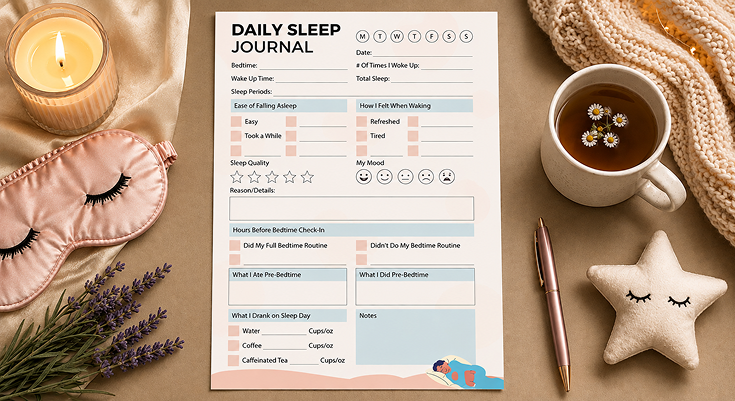
Using a sleep journal template is a simple yet effective way to understand your nightly routines and improve sleep quality. Whether you’re looking for a printable sleep log or a structured daily sleep journal template, tracking your bedtime habits can help you identify patterns, manage disruptions, and build healthier sleep routines.
With the help of a daily planner app, you can build consistent sleep routines by setting wind-down reminders, logging bedtime habits, and planning your evenings more mindfully. This not only improves your sleep quality but also supports better focus, energy, and emotional balance throughout the day.
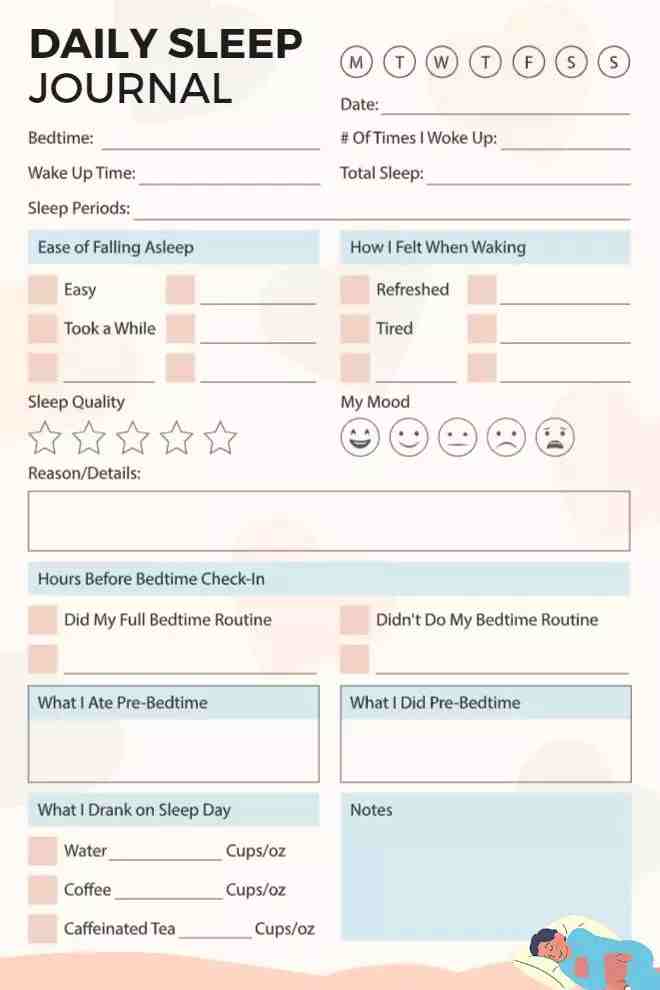
The modern daily sleep journal template features a clean layout with calming colors, making it easy to record daily sleep insights. The comprehensive wellness section includes mood tracking, bedtime habits, and reflection space. Minimalist fonts enhance readability, while a well-organized structure ensures seamless journaling for better sleep awareness.
Why Are Soft Colors Ideal for This Modern Daily Sleep Journal Template?
Color psychology plays a crucial role in enhancing relaxation, especially when it comes to sleep tracking. Soft colors like pastel blues, muted greens, and warm neutrals create a soothing atmosphere that helps users unwind before bedtime. A well-designed Daily Sleep Journal Template should incorporate these colors to reinforce calmness and promote restful sleep.
The Psychological Impact of Soft Colors
- Blue hues: encourage relaxation and lower heart rate, making them perfect for a sleep-focused journal.
- Muted greens: Symbolize tranquility and balance, reducing stress before sleep.
- Beige and warm neutrals: These provide a cozy and inviting feeling, making journaling an enjoyable habit.
Soft colors also reduce visual strain, ensuring users can easily engage with their sleep-tracking entries without feeling overwhelmed. These gentle shades create a calming effect, making it easier to focus on self-reflection. By integrating soft hues, the journal offers an inviting, peaceful, and visually comfortable space for tracking sleep patterns and improving overall rest quality.
Enhancing Readability and Aesthetic Appeal
The combination of soft colors with minimalistic design elements ensures better readability. Light-colored backgrounds with dark or neutral text contrast well, preventing eye strain while writing before bedtime. Moreover, a well-balanced color scheme enhances the journal’s modern and sophisticated look, making it an aesthetically pleasing tool for daily use.
Consistency in Theme for Better User Experience
A modern daily sleep journal template should maintain a consistent color palette throughout the entire layout. From header sections to individual trackers, a uniform color scheme ensures an intuitive design, keeping users engaged and helping them associate journaling with relaxation and bedtime routines.
How Can You Track Your Sleep Timing and Duration with the Template?
The foundation of any sleep journal is tracking when you sleep and how long you sleep. The PlanWiz Daily Sleep Journal Template includes fields for “Bedtime,” “Wake Up Time,” “Sleep Period,” and “Total Sleep,” making it easy to monitor your sleep timing and duration. Understanding these metrics helps you assess whether you’re getting enough rest and maintaining a consistent schedule.
Why Tracking Sleep Timing Matters
Sleep duration and consistency directly impact your energy, mood, and overall health. Adults typically need 7-9 hours of sleep per night, but irregular bedtimes or wake-up times can disrupt their circadian rhythm. By logging these details in the template, you can identify gaps and work toward a more stable routine.
How to Use the Template for Sleep Timing
Building a consistent sleep schedule is easier when you have a clear plan for your entire day. By organizing your daily activities alongside your sleep goals using schedule planner templates, you can ensure that your bedtime and wake-up times align with your broader routine, creating a balanced lifestyle that supports better rest.
Tips for Better Sleep Timing
- Aim for Consistency: Try to go to bed and wake up at the same time daily, even on weekends, to regulate your body clock.
- Set Reminders: Use alarms to remind you of your target bedtime, and log any deviations in the template to understand why they happened.
- Adjust Gradually: If your bedtime varies widely, shift it by 15 minutes earlier each week until you reach your goal.
Example: Lisa noticed she was going to bed between 11 PM and 1 AM, with wake-up times varying from 6 AM to 8 AM. Using the PlanWiz template, she logged her times for a week and calculated her total sleep, which averaged only 6 hours. She set a goal to hit a 10:30 PM bedtime, and within two weeks, her total sleep increased to 7.5 hours, leaving her more energized.
What Role Do Grid Structures Play in This Modern Daily Sleep Journal Template?
Grid structures are essential in journal templates as they bring clarity, organization, and efficiency to sleep tracking. A well-structured grid layout ensures all sections, from bedtime routines to mood tracking, are aligned and easy to navigate. Explore the best planner organization ideas for structured sleep tracking that helps to optimize layouts and make journaling more effective.
Benefits of a Grid-Based Design
- Improved readability: A clear structure allows users to track their sleep insights effortlessly.
- Consistent layout: This keeps the journal visually organized, reducing distractions.
- Balanced spacing: ensures that all elements are evenly distributed, improving the user experience.
By incorporating a grid-based format, users can systematically log their bedtime habits, daily sleep duration, and reflections without clutter. This structured approach transforms the Daily Sleep Journal Template into a streamlined tool for sleep improvement.
Optimizing Data Entry for Sleep Tracking
A well-designed sleep journal should feature dedicated sections within a structured grid framework for seamless data entry. Key areas should include bedtime routines, sleep duration, wake-up times, dream patterns, mood tracking, and external factors like caffeine intake. This structured approach enhances clarity, consistency, and efficiency, making sleep analysis more insightful and actionable.
- Bedtime and wake-up times
- Sleep quality ratings
- Pre-bedtime habits
- Dream journal and notes
How Does Monitoring Sleep Quality and Mood Help You Improve Your Rest?
The PlanWiz Daily Sleep Journal Template includes sections for “Sleep Quality,” “Ease of Falling Asleep,” “How I Felt When Waking,” and “My Mood,” allowing you to assess not just how much you sleep, but how well you sleep. These qualitative metrics provide deeper insights into your rest and emotional well-being.
The Importance of Sleep Quality and Mood
Poor sleep quality or difficulty falling asleep can leave you feeling tired, even after 8 hours in bed. Similarly, your mood upon waking can signal how restorative your sleep was. By tracking these factors, you can pinpoint what’s working—or what’s not—and make adjustments to improve your overall sleep experience.
How to Use the Template for Sleep Quality and Mood
Example: Tom rated his sleep quality as 3 stars for several nights and often marked “Took a While” for falling asleep. He also noticed his mood was consistently neutral or sad. In the “Reason/Details” section, he wrote, “Used phone until bedtime.” After switching to reading a book for 30 minutes before bed, he logged “Easy” for falling asleep, a 4-star sleep quality, and a happier mood.
How Does This Modern Daily Sleep Journal Template Support Mindful Sleep?
Mindfulness enhances sleep quality, and a Modern Daily Sleep Journal Template supports it through self-reflection, habit tracking, and guided prompts. Including bedtime rituals, mood assessments, and lifestyle influences promotes relaxation and awareness. A well-structured daily planner app to boost mental health can support these habits, making it easier to achieve mindful and restful sleep.
Encouraging Sleep Awareness
Journaling before bed enables individuals to reflect on sleep habits, recognize patterns, and make adjustments for better rest. A well-structured wellness section in the template helps users monitor sleep consistency, identify stress triggers affecting rest, and develop healthier nighttime routines. This mindful approach fosters relaxation, enhances sleep quality, and supports overall well-being.
- Monitor sleep consistency
- Recognize stress triggers affecting rest
- Develop healthier nighttime routines
Creating a Habit of Self-Reflection
A well-structured sleep journal includes guided prompts that encourage users to analyze how daily activities impact their sleep quality. By tracking patterns and identifying disruptions, individuals can make informed adjustments to their bedtime routines. A daily planner app to track your self-care routine helps reinforce healthy habits, promoting relaxation and long-term sleep consistency.
Building a Sleep-Positive Mindset
Maintaining a Daily Sleep Journal Template encourages a self-care routine that fosters mindfulness and self-awareness. By recording sleep patterns and moods, users reinforce the value of quality rest. Integrating a daily planner app to build healthy routines helps identify sleep disruptors, establish better habits, and cultivate a structured sleep schedule, ultimately improving overall well-being and nighttime relaxation.
How Can You Use the Pre-Bedtime Check-In to Optimize Your Routine?
The “Hours Before Bedtime Check-In” section of the PlanWiz Daily Sleep Journal Template helps you reflect on your pre-bedtime activities and habits. With fields like “Did My Full Bedtime Routine,” “What I Ate Pre-Bedtime,” and “What I Did Pre-Bedtime,” this section encourages you to build a consistent wind-down routine that promotes better sleep.
Why Pre-Bedtime Habits Matter
What you do in the hours before bed can significantly affect your ability to fall asleep and stay asleep. A consistent bedtime routine signals to your body that it’s time to rest, while habits like eating heavy meals or using screens can disrupt sleep. Tracking these activities in the template helps you identify what works best for you.
How to Use the Template for Pre-Bedtime Tracking
Check Routine Completion
Mark whether you “Did My Full Bedtime Routine” or “Didn’t Do My Bedtime Routine” to assess consistency. For example, your routine might include brushing teeth, stretching, and reading.
Log Pre-Bedtime Activities
In the “What I Did Pre-Bedtime” field, note activities like watching TV, meditating, or scrolling on your phone.
Track Food Intake
Use the “What I Ate Pre-Bedtime” field to record snacks or meals, such as “Ate a banana” or “Had a heavy dinner.” This helps you spot if certain foods affect your sleep.
Correlate with Sleep Quality
Compare your pre-bedtime entries with your “Sleep Quality” and “Ease of Falling Asleep” ratings to identify patterns.
A well-planned bedtime routine can make all the difference in winding down effectively, but it’s often part of a larger daily routine that sets the stage for better sleep. Mapping out your entire day’s habits with routine planner templates can help ensure your pre-bedtime activities are consistent and conducive to rest.
Tips for an Effective Bedtime Routine
- Establish a Routine: Create a 30-minute wind-down routine, like reading or listening to calming music, and track it in the template.
- Avoid Stimulants: Skip heavy meals, alcohol, or screens before bed, and use the template to monitor how these changes improve your sleep.
- Be Consistent: Even on busy nights, aim to do at least part of your routine, and note any deviations to understand their impact.
How Does Tracking Consumption on Sleep Day Impact Your Rest?
The “What I Drank on Sleep Day” section of the PlanWiz Daily Sleep Journal Template lets you monitor your intake of water, coffee, and caffeinated tea, which can significantly affect your sleep. By tracking these habits, you can make informed adjustments to improve your rest.
The Role of Consumption in Sleep
Caffeine and hydration levels play a big role in sleep quality. Too much coffee or tea, especially late in the day, can keep you awake, while dehydration can cause discomfort. The template’s consumption tracker helps you see how these factors influence your sleep patterns.
How to Use the Template for Consumption Tracking
In the “Water” field, record how many cups or ounces you drank throughout the day (e.g., “8 cups”).
Note your coffee and caffeinated tea intake in the respective fields, including the amount and timing (e.g., “2 cups of coffee at 3 PM”).
Use the “Notes” section to jot down additional details, like “Felt jittery after late coffee” or “Drank water consistently.”
Compare your consumption data with your “Sleep Quality” and “Ease of Falling Asleep” entries to spot correlations.
Monitoring your daily consumption is a key part of maintaining overall health, which directly influences your sleep quality. By keeping a broader view of your health habits with a health planner template, you can better understand how your diet and hydration choices affect your rest and make holistic improvements.
Tips for Managing Consumption
- Limit Caffeine After Noon: If you notice poor sleep after late caffeine, set a cutoff time (e.g., 2 PM) and track the results in the template.
- Stay Hydrated Early: Drink most of your water earlier in the day to avoid frequent bathroom trips at night, and log your intake to ensure balance.
- Experiment and Adjust: If you suspect caffeine is affecting you, reduce your intake gradually and use the template to monitor changes.
Example: John logged 3 cups of coffee, with the last one at 5 PM, and struggled to fall asleep. After a week of tracking, he shifted his last coffee to 1 PM and increased his water intake to 10 cups. His sleep quality improved, and he fell asleep more easily, which he noted in the “Notes” section: “Better sleep after cutting late coffee.”
Conclusion
A Modern Daily Sleep Journal Template enhances sleep tracking through structured layouts, soft colors, and mindful reflection. It promotes self-awareness, consistency, and relaxation and fosters healthier nighttime habits with guided prompts and a well-organized design. The PlanWiz planner app is an effective tool for improving sleep quality, overall well-being, and long-term restfulness.
FAQs
A daily sleep journal template is a customizable tool designed to help you track your sleep patterns, habits, and wellness factors like bedtime routines, sleep quality, and mood, enabling you to improve your rest and overall well-being.
By tracking metrics like sleep timing, quality, and pre-bedtime habits, the template helps you identify patterns and disruptions, allowing you to make informed adjustments for better rest, such as maintaining a consistent bedtime or reducing caffeine intake.
It includes sections for Bedtime, Wake Up Time, Sleep Period, Total Sleep, Sleep Quality, Ease of Falling Asleep, How I Felt When Waking, My Mood, Hours Before Bedtime Check-In, What I Drank on Sleep Day, and Notes.
Record your bedtime and wake-up time daily in the respective fields, calculate your sleep period (time in bed), and subtract any awake time to find your total sleep, helping you monitor consistency and duration.
Tracking sleep quality helps you understand how restful your sleep is, revealing factors like restlessness or poor pre-bedtime habits that may need adjustment to improve your overall sleep experience.