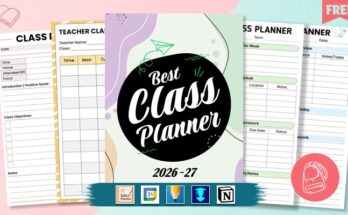
Juggling clinical rotations, lectures, assignments, and personal responsibilities can seriously challenge nursing students. That’s where a thoughtfully crafted nursing student weekly planner by PlanWiz comes in; it brings clarity to your schedule and helps you stay organized week after week. Exploring different nurse planner templates can be a valuable first step toward staying organized, managing your time effectively, and staying ahead in your nursing journey.
Weekly schedule maker is designed specifically for the demands of nursing school. It supports you in prioritizing tasks, meeting deadlines, and making space for self-care, so you can stay balanced and focused all semester long.
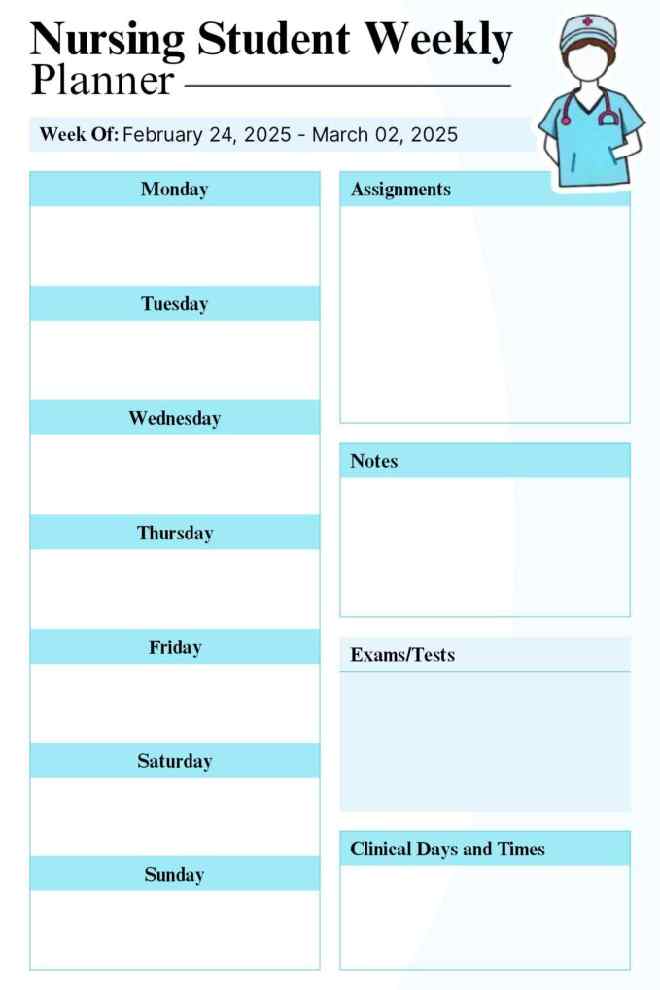
A busy nursing school schedule can feel overwhelming, but a well-structured planner makes all the difference. This Nursing Student Weekly Planner helps track coursework, clinical shifts, and exams with dedicated sections for daily planning and assignments. It’s light blue, professional design offers a calming way to stay organized.
This weekly planner template helps nursing students track deadlines, take notes, and manage responsibilities with ease. Its structured layout balances academics and clinical training while reducing stress. Also, explore the versatile printable planner template to stay focused and productive, whether preparing for exams or tracking clinical hours.
The Life of a Nursing Student: Why Is Time Management Crucial?
Nursing school is mentally and physically demanding, with lectures, clinicals, exams, and personal responsibilities to balance. Without effective time management, staying on top of tasks can be overwhelming. This can lead to stress, exhaustion, and even burnout.
The Common Struggles of Nursing Students
- Hectic Schedules: Balancing lectures, lab work, and clinical shifts is challenging.
- Never-Ending Assignments: Exams, case studies, and research papers keep piling up.
- Sleep Deprivation: Late-night study sessions often lead to exhaustion.
- Lack of Personal Time: Self-care and social life take a backseat.
- Information Overload: Memorizing medical terminology, procedures, and patient care plans can be overwhelming.
Why Time Management is a Game-Changer
A well-organized schedule can transform chaos into clarity by helping you:
- Stay on top of coursework without last-minute cramming.
- Manage clinical rotations efficiently without missing important tasks.
- Allocate time for rest and self-care to avoid burnout.
- Reduce anxiety by planning and breaking tasks into manageable steps.
- Improve focus and productivity by setting clear priorities.
Mastering time management with a weekly planner helps you stay organized and stress-free in your nursing journey. Learn to stay organized with practical time management tips to maximize your study sessions and create a balanced routine. Next, we’ll explore the key features of an effective nursing student planner!
What Are the Key Features of an Effective Nursing Student Weekly Planner Template?
A well-designed weekly planner is more than just a to-do list. It’s a structured system that helps you balance your studies, clinical, and personal time efficiently. To make the most of your planner, it should include essential sections tailored to the unique demands of a nursing student.
Class & Lecture Schedule
- Track class timings and topics.
- Note key points after lectures.
- Highlight assignment and quiz deadlines.
Clinical Rotation Planner
- Organize shifts and hospital locations.
- Note patient care tasks or observations.
- Track hours and log evaluations.
Assignment & Exam Tracker
- List deadlines and exams.
- Use symbols to prioritize tasks.
- Break tasks into smaller steps.
To-Do List & Prioritization
- Plan daily high-priority tasks.
- Use the Eisenhower Matrix.
- Leave room for quick reminders.
Study Planner & Review Schedule
- Review notes and prepare for exams.
- Schedule group study sessions.
- Use spaced repetition.
Self-Care & Wellness Tracker
- Track rest, nutrition, and activity.
- Log sleep, hydration, and stress levels.
- Set small wellness goals.
How Should You Structure Your Weekly Plan as a Nursing Student for Maximum Efficiency?
Creating a weekly plan isn’t just about writing down tasks—it’s about organizing your time strategically to stay productive, reduce stress, and maintain balance. Here’s a step-by-step guide to structuring your planner efficiently as a nursing student.
📅 Step 1: Plan Your Week (Sunday Strategy)
Set aside time every Sunday to map out your week, ensuring clarity and focus for the days ahead. Use a structured approach, like the one outlined in our guide on how to plan your week, to align your goals and boost productivity.
- Set aside 15-30 minutes every Sunday to plan your upcoming week.
- Review your class schedule, clinical shifts, and assignment deadlines.
- Identify high-priority tasks and allocate time blocks for them.
- Keep space for flexibility—unexpected tasks may come up!
🕒 Step 2: Use Time Blocking for Each Week
Time blocking helps you allocate specific time slots for different activities throughout the week, ensuring a balanced and structured schedule. By planning, you can avoid overbooking yourself and create time for both work and personal activities.
Example of a Structured Weekly Plan:
| Day | Time Slot | Task |
|---|---|---|
| Monday | 7:00 AM – 9:00 AM | 📝 Morning routine & planning |
| Tuesday | 9:30 AM – 12:30 PM | 💻 Work on a major project |
| Wednesday | 12:00 PM – 1:00 PM | ☕ Lunch & relaxation |
| Thursday | 3:00 PM – 5:00 PM | 🏋️♀️ Exercise or self-care |
| Friday | 6:00 PM – 8:00 PM | 🍽️ Social time/dinner with friends |
| Saturday | 10:00 AM – 12:00 PM | 🏠 Household chores & errands |
| Sunday | 5:00 PM – 7:00 PM | 📅 Weekly review & planning for next week |
Pro Tip: Color-code different activities (e.g., work, self-care, social time) to visualize your week at a glance and stay organized!
🎯 Step 3: Prioritize Your Tasks Smartly
Not everything on your list has the same urgency. Use one of these prioritization methods:
- Eisenhower Matrix – Categorize tasks as urgent & important, important but not urgent, urgent but not important, or neither.
- ABCD Method – Rank tasks from A (critical) to D (least important).
- “Big 3” Rule – Focus on 3 main priorities per day to avoid feeling overwhelmed.
📖 Step 4: Allocate Study & Review Time Wisely
- Use the Pomodoro Technique (25-minute study, 5-minute break) to stay focused.
- Schedule revision time daily instead of cramming before exams.
- Switch subjects every few hours to prevent fatigue.
- Use active recall & spaced repetition to retain information better.
💆 Step 5: Don’t Forget Self-Care & Breaks
- Avoid back-to-back tasks—schedule short breaks to recharge.
- Make time for exercise, meditation, or hobbies to prevent burnout.
- Ensure adequate sleep (6-8 hours) for better concentration.
🔄 Step 6: Review & Adjust Your Plan Weekly
- At the end of each week, reflect on what worked and what didn’t.
- Adjust your planner based on upcoming deadlines and workload.
- Celebrate small wins—progress, not perfection, is the key!
What Are the Pro Tips for Staying Consistent with Your Nursing Student Weekly Planner Template?
Creating a weekly planner is just the first step sticking to it is where the real challenge lies! Here are some practical tips to help you stay consistent with your planner and make it a seamless part of your nursing school routine.
Set Realistic & Achievable Goals
- Don’t overload your planner with too many tasks—be realistic about what you can accomplish each day.
- Break large tasks into smaller, manageable steps to avoid feeling overwhelmed.
- Use SMART goals (Specific, Measurable, Achievable, Relevant, Time-bound) for better productivity.
Make Planning a Weekly Habit
Consistency is key to staying organized and productive. Instead of just daily check-ins, dedicate time each week to review, adjust, and set goals for the days ahead. Using a meal planner template can streamline this process, helping you organize your meals and align your nutrition goals with your weekly schedule.
- Start your week strong: Spend 15–20 minutes every Sunday or Monday morning outlining your priorities, appointments, and tasks for the entire week.
- Mid-week check-in: Take a few minutes mid-week (e.g., Wednesday evening) to assess progress and make necessary adjustments.
- End-of-week reflection: Before the week ends, review accomplishments, note unfinished tasks, and plan for the upcoming week.
Use Color Coding & Symbols for Quick Glance Organization
- Assign different colors for classes, clinics, study sessions, and personal time.
- Use symbols like ⭐ for high-priority tasks, ✅ for completed tasks, and 🔄 for tasks that need rescheduling.
- Keep it visually appealing—a well-organized planner is easier (and more fun) to follow!
Stick to a Weekly Review Routine
- Set aside 10-15 minutes every Sunday to plan your week.
- Reflect on what worked and what needs adjustment.
- Move unfinished tasks to the next week and refine your time management approach.
Combine Paper & Digital Planning (If Needed)
- If you love writing things down, stick to a paper planner.
- If you prefer reminders & notifications, use a digital planner or app.
- A hybrid system (paper for daily planning + digital for reminders) works best for many nursing students!
Allow Flexibility – Life Happens!
- Your planner is a guide, not a rigid rulebook—adjust as needed.
- If you miss a task, reschedule instead of stressing over it.
- Don’t aim for “perfect planning”– aim for progress and balance.
How Do Nursing Students Benefit from a Weekly Planner Template? Success Stories Revealed
A well-structured weekly planner isn’t just another notebook—it’s a game-changer for nursing students navigating their busy schedules. Let’s look at some inspiring success stories from nursing students who transformed their academic and personal lives through effective planning.
📖 Case Study #1: From Overwhelmed to Organized – Emma’s Story
The Challenge: Emma, a second-year nursing student, struggled with juggling classes, clinical rotations, and assignments. She often forgot deadlines and found herself cramming the night before exams, leading to stress and poor retention.
The Solution: Emma began using a color-coded weekly planner, breaking tasks into daily schedules and dedicated study blocks. By applying effective task prioritization and prioritization strategies for a stress-free study plan, she ensured high-priority assignments received proper focus. She also tracked self-care to maintain her mental and physical well-being.
The Result: Within a month, Emma felt more in control of her workload. She no longer procrastinated, and her grades improved significantly. Most importantly, she had more free time without feeling guilty!
⏳ Case Study #2: Clinical Rotations Made Easy – Jason’s Experience
The Challenge: Jason, a final-year nursing student, found it hard to keep track of his clinical shifts, patient care responsibilities, and study schedule. He often forgot important details from his clinical rounds, making it difficult to prepare for evaluations.
The Solution: He started using a dedicated planner section for clinics, where he logged his patient interactions, key observations, and notes on procedures. This structured approach helped him stay organized and retain crucial information. To simplify your student life with a notes planner, he also scheduled weekly review sessions to revise his clinical experiences and connect them with his coursework.
The Result: Jason felt more confident during clinicals and could easily recall important details during exams and patient assessments. His supervisors also noticed his improved preparedness and attention to detail!
Conclusion:
A nursing student’s life is demanding, but a well-structured planner clarifies coursework, clinicals, and self-care. Prioritize tasks, use time-blocking, and balance academics with well-being for long-term success. Harness the efficiency of the PlanWiz planner app to streamline your schedule—start today with our free Nursing Student Weekly Planner template!
FAQs
A weekly planner is a tool to organize tasks, schedules, and goals, helping nursing students manage school, clinicals, and personal life.
A planner helps balance demanding schedules, track deadlines, and reduce stress by keeping tasks organized.
It breaks down tasks into manageable chunks, prioritizes responsibilities, and ensures time for studying, clinicals, and rest.
Planwiz offers customizable templates, reminders, and sections for academic and clinical tasks, tailored to nursing school demands.
Yes, its user-friendly interface allows quick setup, customization, and task management for busy students.