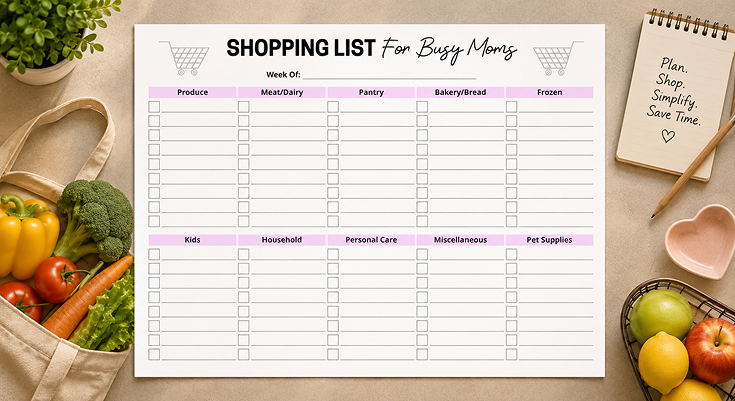
It can be very stressful for busy moms to oversee their weekly grocery lists, along with juggling their job, taking care of their children, and taking care of household chores. This stressful routine of countless busy moms is changed into a smooth routine through the Weekly Shopping Checklist for Busy Moms Planner. Planwiz provides a printable as well as online copy of this planner. This is a very effective tool created specifically to deal with busy families.
Creating a list is not the hard part. The real challenge is coming up with one that still functions when you are walking through crowded aisles with impatient children. This planner features specifically what the needs of busy families are such as having separate sections for kids’ items, pet supplies, and household essentials that are frequently overlooked in the generic lists. The next guide will teach you the exact steps of using this planner to keep the time, money, and mental energy on the shopping trips.
What Is a Weekly Shopping Checklist for Busy Moms Planner?
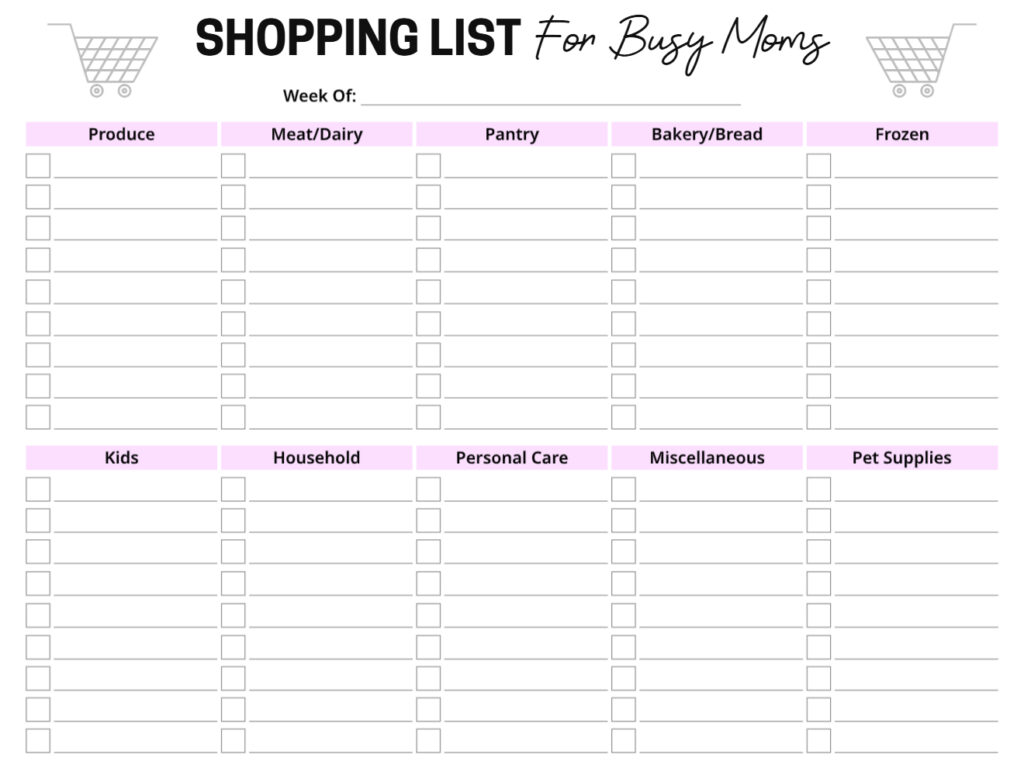
A Weekly Shopping Checklist for Busy Moms Planner is a template which categorizes grocery and household items in a manner that makes sense such as fresh fruits and vegetables, meat, dairy products, pantry items, kid items, pet items, and personal care items. Well-organized grocery lists like this one are significantly more efficient than poorly organized grocery lists as you create them according to the store layout, thus you can do shopping easily without going back to the same places.
This organizational tool takes disorganized shopping excursions and makes them optimized, goal-directed expeditions that maximize time and dollar savings. Busy moms typically waste 15-20 minutes on the shopping excursion cruising the aisles in an effort to remember the forgotten items or going back to an area of the store that they have already traversed. This shopping list for busy moms planner prevents the waste of time by allowing the user to create a roadmap section by section.
What Strategies Work With a Weekly Shopping Checklist for Busy Moms Planner?
How Can I Prepare at Home to Shop Faster?
Plan Your Route Mirror the structure in your planner in how you section off the aisles in the store. Always start with produce, then meat/dairy products, and finish off the aisles in the center. Keep the frozen products at the end. Number the sections 1-10 according to the typical route in the store to avoid going around in the opposite direction. Daily planner templates can aid in organizing your daily activities and the best times to go shopping.
Set Your Shopping Window Shopping from Tuesday to Thursday during the 9-11am time slot ensures the quickest travel time. There are also considerably fewer consumers during the weekday morning compared to the Saturday afternoon, reducing congestion by 60%.
Prep Your Supplies Attach a small clipboard with a pen attached to your planner. Take reusable bags to your car this time, rather than when you’re rushing out the door. Emergency kid snacks should go in a small pouch.
What Are the Best In-Store Speed Shopping Tactics?
The “One-Touch Rule” Check off each item immediately after placing it in your cart-not later, not at checkout. This prevents duplicate grabbing and shows exactly what’s left.
The “Skip & Return” Method Can’t find an item in 30 seconds? Circle it on your planner and keep moving. Return to the customer service desk at the end to ask for help finding all circled items at once.
The “Cart Placement Strategy” Put heavy items (milk, juice) in the back of your cart, frozen foods on one side, fragile items (eggs, bread) in the child seat area. This organization speeds up both shopping and checkout bagging.
The “Kid Job System”
- Ages 3-5: Item checker (they mark off what you grab)
- Ages 6-8: Finder helper (spot items on lower shelves)
- Ages 9+: Calculator assistant (track spending on phone)
Keeping kids engaged during shopping is just one aspect of family organization family planner templates helps coordinate everyone’s schedules and responsibilities throughout the week.
How Can I Speed Up Checkout and Car Loading?
Choose Your Lane Wisely Count total items in other shoppers’ carts, not how many people are in line. One person with 50 items takes longer than three people with 10 items each.
Unload Strategically Group same, category items together on the conveyor belt (all cold items, all produce, all boxes). This helps baggers work faster and prevents frozen food mixed with bread.
Use Bag, While, You, Shop If your store allows, bring your own bags and pack items directly from your cart during shopping. Skip the checkout bagging process entirely by having everything pre, packed.
What Is the “Power Hour” Shopping Method?
What it is: Complete your entire weekly shopping trip in 60 minutes or less by combining all strategies above.
The breakdown:
🏠 10 minutes: Home prep (review planner, pack supplies)
🛒 35 minutes: In-store shopping (systematic route following)
💳 10 minutes: Checkout (strategic lane choice, efficient unloading)
🚗 5 minutes: Car loading and cart return
Pro tip from experienced moms: Time yourself for 4 weeks using your Busy Moms Planner. Most families cut their shopping time by 40-50% once the system becomes automatic. Combining this with weekly planner templates ensures all your weekly tasks stay organized and manageable.
When Should I Break These Time-Saving Rules?
Emergency Quick Trips (15 minutes max) Need just 5-8 items? Use a basket, not a cart. Write items on your hand or phone notes instead of your full planner. Shop during off-peak, grab, and go.
Monthly Stock-Up Trips (90 minutes) For warehouse stores or monthly bulk shopping, bring your planner but expect longer trips. Focus on non-perishables, paper products, and freezer items that reduce weekly shopping needs. Monthly schedule planner templates helps you track these bigger shopping trips alongside your regular weekly runs.
Holiday/Party Shopping (extended time) Special occasion shopping doesn’t follow normal rules. Make a separate checklist for these trips and shop when you’re not rushed or managing regular meal planning.
What Are Signs I’m Shopping Inefficiently?
- You visit the same aisle twice because you forgot something
- You spend 10+ minutes deciding what brand to buy
- You shop during 5-7 PM weekday rush or weekend afternoons
- You bring your planner but rarely look at it while shopping
- You discover at checkout you forgot a list section entirely
The fix: Your Busy Moms Planner only works if you actually follow it systematically. Treat it like GPS navigation-trust the route you planned at home.
Speed shopping isn’t about rushing-it’s about eliminating wasted motion, decision fatigue, and forgotten items through systematic planning. Your organized planner is the foundation; these strategies are the execution
Frequently Asked Questions
A Weekly Shopping Checklist for Busy Moms Planner takes care of this problem by providing a template that breaks down grocery items into categories such as produce, dairy products, pantry, kid items, and household essentials.
This methodical way to shop for groceries reminds you to buy everything your family needs without putting too much work into it.
With this planner, you will save 30-40% on time when doing your groceries because you will arrange products according to the store format so that you won’t need to retrogress through the aisles.
You will also avoid forgotten necessaries so that inconvenient returns to the store will not be mandatory due to lack of essential products.
First, go over your meal plan and determine what ingredients and products you have available in the pantry, refrigerator, and freezer. Then fill out the template by writing the ingredients in the specific category section and the “Week Of” date at the start.
As you are shopping, mark off the item as soon as it goes into the shopping cart so that there’s no overlap in the things that you are purchasing.
You should keep this list visible, clipping it to the shopping cart or keeping it handy in your purse, rather than the purse contents obscuring it, making it a hassle to retrieve among other things like the kids.
The costliest mistake involves going shopping without scanning the pantry, resulting in duplicate purchases that cost the consumer $200-400 by the end of the year.
Another mistake involves listing products randomly rather than listing products by categories, leading to extensive looping around the aisles with impatient kids.
Additionally, some consumers fall short when it comes to placing the quantities on their shopping list, simply writing ‘bananas’ instead of ‘bananas (6)’ or similar, thus acquiring insufficient or excessive commodities. This should be avoided by considering the exact quantities needed.
Organization by category mirrors the way markets usually arrange groceries so that you can walk through the categories in an efficient manner without having to double-back.
Rather than wandering and choosing items as you go and trying to remember the things you forgot in the previous aisles, you finish the produce section and then the meat/dairy section and finally the pantry section.
This systematic approach can be very helpful, particularly in places like supermarkets when shopping with children who lack the necessary patience.
The organized planner will also enable you to spend less time shopping because, instead of roaming around in an attempt to remember all the items on your list, you will be on a systematic track.
The “Dedicated Kids and Pet Supplies” sections include features that remind you to always have crucial products that, when in short supply, present an emergency in a household.
It’s stressful for busy moms when supplies such as diapering accessories, infant formula, baby food, pet drugs, and pet food run out in a week that’s already chaotic.
These are general questions which trigger a reminder in the memories pertaining to the requirements of all the members belonging to the family, including the pet. Without this reminder, a person can very well overlook the requirements other than the ingredients needed for the meals.
Shop during times when it’s less busy, like Tuesday to Thursday in the mornings when you can easily move around without encountering too many people in the stores. Arrange your planner in a manner that organizes categories based on store structure so that you visit each portion only once.
The things that you tend to forget the most should be first on the list, as priority reminders before you categorize them.
You should involve the older children in the task if their parents allow them to mark off the things as the parents are shopping, keeping the children involved and ensuring the parents complete their list.
The use of to-do planner templates each week allows you to jot down notes whenever you remember them instead of having to recall them all when it’s time for a meeting.
Yes, meal planning should definitely come first as it is the essential tool that leads to the creation of an effective shopping list which in turn ensures saving money and avoiding waste of meals.
First, meal plan 5, 7 dinners for the week and then write down the ingredients required for the meals. After that, check how much of the ingredients are available before adding the remaining ingredients to the planner by category.
This will make sure that you acquire the ingredients that make up complete dishes rather than random ingredients that do not complement each other.
Your planners will turn into an indispensable tool for planning meals and following through with purchases, thus, lessening the stress of staring at your fridge at 5 PM wondering what to cook. You meal planning and shopping list can also be matched with weekly meal planner templates.
8. How do I prevent impulse purchases when using this shopping planner?
Commit to buying only what’s written on your planner before entering the store, and establish this as a firm household rule. Shop after eating rather than when hungry, since hunger increases impulse purchases by up to 64% according to shopping behavior research.
Give children who accompany you a small budget for one predetermined special item chosen at the end if they help cooperatively. This redirects their treat-seeking behavior into constructive behavior instead of begging for treats throughout the store, keeping you on task with the things you intend to buy.
Budget planner templates can aid in allocating budgets for groceries and also assist in staying within the allocated food budgets each month.
Absolutely, and the way the categories are set up is very flexible regarding the grocery run, as sections are adjustable based on the type of market visited.
When Targeting or Walmarting, the main sections would focus on Household and Personal Care, but keep the grocery sections. If farmers’ market shopping, the categories would encompass a bigger Produce section and fewer categories of processed foods.
For warehouse clubs such as Costco/Sam’s Club, concentrate on warehouse items in categories such as Pantry, Frozen, and Home.
With the flexible planner, you can tailor your planning based on where you do your weekly errands, whether it involves multiple or one-stop shopping.
Your master planner should be updated every month as your family’s preferences and needs change-your kids may outgrow some foods, you find out about new foods, or needs may change.
But for every particular week, you will be making a new master copy for that week’s particular items.
Keep finished planners for 4-6 weeks so that purchasing trends can be determined, as well as commonly missed items.
Also, these planners can be used for optimization for shopping, as money trends can be observed, thereby enabling you to fine-tune what should be preload entry in your master template.