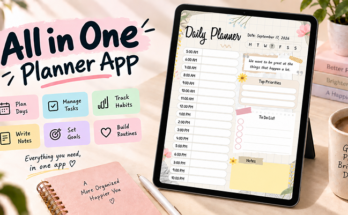

Freelancers often enjoy the flexibility of self-employment, but this freedom can lead to disorganization and stress. Juggling multiple projects and clients without a structured approach can result in missed deadlines and unhappy clients. Poor time management not only increases anxiety but also negatively impacts income and reputation. Monthly planner app for freelancers that offers essential solutions to help freelancers organize tasks, set deadlines, and establish productive routines.
How a Monthly Planner App Restructures a Freelancer’s Work Process
To succeed, both freelancers and clients need effective time management because freelancers have to work with demanding clients within strict project timelines while balancing their commitments. The monthly planner app functions as a valuable platform that transforms how freelancers structure their work activities. Freelancers gain improvement in productivity and well-being by using these apps, which enable proactive planning and help them manage deadlines better and find a balance between work and growth objectives while showing how time is used in their workflows.
Shifts from Reactive to Proactive Planning
Freelancers function in reactive mode mainly because they respond to client-expressed needs and timetable requirements when they present themselves. The reactive mode creates disorder that results in lost potential together with higher stress levels. The monthly planner app provides freelancers with tools that help them transition from their normal reactive working method to a strategic planning system for their work tasks.
Freelance writers tend to start their projects only when clients first seek an article and then decide when they will write it. Users of monthly planner apps can plan numerous articles when entering their deadlines during the month’s start. Such platforms enable users to prepare writing sessions in advance while creating plans for research tasks along with adding revision alert schedules. The writer benefits from systematic project handling, which produces better quality results together with minimized stress.
Reduces Last-Minute Deadline Stress
The habit of late deadline scrambling is frequent among freelance professionals, leading to work quality deterioration and deteriorating client relations. Membership in monthly planning applications reduces freelancer stress because these tools demonstrate upcoming due dates alongside project requirements.
Website designers with various end-month deadlines can add their critical dates to their monthly planning system. Graphic designers access allotted timeframe details when they set up their planner, which lets them better manage their work assignments. Freelancers who detect several deadlines arriving at once should reach out to clients for contract adjustments or better schedule organization. With the planner in place, freelancers gain protection from sudden work emergencies, which enables them to handle deadlines with a calm and decisive approach.
Creates a Balance Between Client Work & Business Growth
User-freelancers encounter difficulties in managing client projects alongside fundamental business activities that include networking events as well as skill development activities and marketing needs. A monthly planner application creates work-life balance for freelancers because it lets them schedule both client assignments and essential business development tasks.
A social media manager maintains an overly full agenda that contains both content generation for clients and active client engagement work. The planner app enables users to define weekly segments for their work, professional improvement, and client relationship activities. People use specific time slots on Fridays to master new social media methods and attend business webinars while making connection attempts with potential new clients. The organized method protects freelancers from overlooking both client obligations and company advancement initiatives.
Helps Freelancers See Where Their Time Goes
A monthly planner application proves its greatest strength through its capability to monitor how freelancers distribute their available period. The majority of apps offer time-tracking functions and enable users to record their work time dedicated to particular projects. Such transparency brings significant transformation to freelancers, as they typically face difficulties assessing their time management.
The initial assessment of a web developer indicates that coding tasks form the primary part of their workload. Middle-range planner applications often show freelancers that client communication and meetings account for a major part of their workday after using the software for thirty days. The planner application provides knowledge that enables freelancers to establish better communication restrictions with clients and simplify their methods, thus creating additional time for project work.
How Freelancers Use a Monthly Planner App to Build a Rock-Solid Work Routine
Freelancing brings both freedom and independence and specific obstacles regarding time management that freelancers must overcome. A chaotic work environment emerges from pursuing multiple projects, meeting deadlines, and achieving personal growth because freelancers lack an organized approach. The PlanWiz monthly planner app becomes the essential productivity tool that transforms freelance work management by helping professionals plan and maximize their efficacy.
Set Up Your Planner with Projects & Goals
Setting up your planner effectively is crucial for freelancers to manage their time and projects. By organizing projects and defining clear goals, you can enhance productivity and stay focused on priorities.
- Create Project Entries:
- List all current projects.
- Example: A freelance graphic designer may include projects like “Client A Logo Design” and “Client B Marketing Materials.”
- Set SMART goals:
- Define goals that are specific, measurable, achievable, relevant, and time-bound.
- Example: Instead of “Work on Client A’s project,” use “Complete the initial logo concepts for Client A by March 10.”
- Organize by Categories:
- Group projects into categories like client work, personal projects, and professional development.
- This helps in quickly identifying priorities.
Use a Monthly-Weekly Breakdown of Tasks
Utilizing a monthly-weekly breakdown of tasks is essential for freelancers to manage their workload effectively. This structured approach ensures that projects stay on track and priorities are addressed promptly.
- Monthly Overview:
- At the start of each month, outline key tasks related to each project.
- Example: For a website redesign project, list tasks like “Research design trends,” “Create wireframes,” and “Develop site layout.”
- Weekly Planning:
- Break down monthly tasks into weekly segments.
- Example:
- Week 1: “Research design trends” and “Create wireframes.”
- Week 2: “Develop site layout” and “Client feedback sessions.”
- Prioritize Tasks:
- Use techniques like the Eisenhower matrix to determine urgency and importance.
- Prioritize tasks that are both critical and time-sensitive.
Apply Time-Blocking & Focus Techniques
Time-blocking and focus techniques are powerful strategies for freelancers seeking to enhance productivity. By allocating specific time slots for tasks and minimizing distractions, you can achieve focused, efficient work sessions.
- Allocate Time Blocks:
- Schedule specific blocks of time for each task.
- Example:
- Monday 9 AM – 11 AM: “Client A Logo Design”
- Wednesday, 2 PM–4 PM: “Research design trends.”
- Incorporate Focus Techniques:
- Implement strategies such as the Pomodoro Technique, which involves 25 minutes of concentrated effort followed by a 5-minute rest.
- Example: Set a timer for 25 minutes to work on “Client A Logo Design,” then take a 5-minute break.
- Eliminate Distractions:
- Foster a productive workspace by reducing distractions.
- Turn off notifications, use website blockers, and inform others of your dedicated work time.
Track Progress & Optimize Workflow Over Time
Tracking your progress and optimizing your workflow is vital for freelancers to enhance efficiency and productivity. By logging activities, reviewing performance, and adjusting strategies, you can ensure continuous improvement in your work processes.
- Log Your Activities:
- Use time-tracking features in your planner app to log hours spent on tasks.
- Example: After working on “Client B Marketing Materials,” note the time spent on design, feedback, and revisions.
- Review Weekly:
- At the end of each week, assess your completed tasks and performance.
- Example: If “creating wireframes” took longer than expected, analyze why and adjust plans accordingly.
- Optimize Your Workflow:
- Identify patterns in your productivity and adjust tasks and schedules based on findings.
- Example: If certain tasks consistently take longer, allocate more time for them next week.
- Set Monthly Reviews:
- Conduct a comprehensive evaluation of your performance at the end of each month.
- Determine what strategies worked and where improvements can be made.
Building on the previous steps, freelance work planning with a weekly planner app also allows freelancers to translate their monthly objectives into focused weekly tasks. This approach not only helps in organizing their workload but also in prioritizing critical assignments. By visually mapping out their responsibilities, freelancers can allocate time effectively, ensuring deadlines are met while also maintaining a balanced workflow.
The Freelancer’s 4-Step Time Management Framework Using a Monthly Planner App
The necessity of effective time management arises from freelancers handling multiple projects together with different deadlines. A monthly planner application provides organizations with important methods to simplify their workflow operations. You can boost productivity by combining work-life balance with focus retention through a systematic four-step method that starts with monthly planning, moves onto weekly breakdowns, prepares for daily tasks, and ends with monthly assessments.

Step 1: Monthly Planning—Big Picture Overview
Monthly planning forms the basis of successful time management for freelancers. It gives them the chance to assess their work assignments alongside project targets and deadline requirements for the upcoming month. Freelancers should begin their planning by noting important tasks, followed by an inventory of current jobs and upcoming work requirements. Including project deadlines and deliverables. Incorporating planner organization ideas can streamline this process and enhance efficiency. A crucial step involves setting objective monthly targets that are easy to track.
Your aim should focus on creating five articles together with reaching three new clients through pitching and attending a networking event. Your planner app should use its calendar tool to display significant deadline points and project landmarks. Providing a broad perspective gives a better understanding of time allocation effectiveness. Experience development should form an essential part of your plan to avoid both loss of motivation and fatigue.
Step 2: Weekly Breakdown—Prioritization & Adjustments
Distribute your monthly plan into small weekly sections after completing its establishment. Before the week starts, you need to analyze your monthly objectives to determine which duties must be finished to stay on track. The Eisenhower Matrix is one prioritization tactic that enables you to break down responsibilities into urgent and important categories so you can handle urgent and vital tasks first.
Realize each job through a disciplined weekly timetable that distributes work assignments to specific times of each day. Devote your Monday to research activities, with writing tasks on Tuesdays and scheduling client meetings on Wednesdays. Incorporating effective organizational strategies helps you maintain an open attitude, as the freelance work environment tends to be unpredictable. The ability to modify your organizational plan quickly remains essential when responding to important client demands or adjustments in business needs that may occur during the week.
Step 3: Daily Execution—Focus, Track, and Optimize
The following step involves daily execution, which emphasizes high efficiency and productivity rates. Your daily activities should begin with goal-setting that stems from the weekly blueprint and shows what needs to be done. Time-blocking strategies should be implemented to enhance focus because you should dedicate specific hours to writing and client communication tasks.
Your writing assignments should get two hours in the morning with a subsequent brief rest period. Your planner app contains tracking features for documenting both the number of hours and the duration of tasks. Making regular use of this practice will show you how your productivity behaves during different periods. Periodically check your daily achievements so you can enhance your tasks through performance adjustments.
Step 4: Monthly Review—What Worked, What Didn’t
A complete assessment should take place at the end of the month to examine performance outcomes and potential growth opportunities. Begin your evaluation by checking how well you met your monthly objectives, which you established when the month began. Identify and evaluate the difficulties from tasks that ended unsuccessfully and research the underlying causes.
Use the report findings to modify your strategies before the start of the next month. Continued refinement of time-blocking methods makes sense since it proved successful, but you should test new techniques when they do not produce the desired results. You should establish your new monthly objectives through the analysis you gained so you can refine your schedule and boost your time-handling abilities.
Common Errors Freelancers Make When Using a Monthly Planner App
While a monthly planner can be an invaluable tool for freelancers seeking to enhance their time management and productivity, many users fall into common traps that hinder their effectiveness. Understanding these pitfalls is crucial for maximizing the benefits of these apps. By recognizing and addressing these errors, freelancers can optimize their planning processes, stay organized, and ultimately achieve their professional goals more efficiently.
- Inconsistent Usage: Failing to regularly update the planner, leading to missed tasks and deadlines.
- Overloading the Planner: Adding too many tasks or projects in one month, causing overwhelm and burnout.
- Neglecting Prioritization: Not prioritizing tasks results in focusing on less important activities over critical deadlines.
- Ignoring Breaks: Forgetting to schedule breaks and downtime leads to decreased productivity and creativity.
- Failing to Review Progress: Not conducting regular reviews to assess what worked and what didn’t, hindering improvement.
- Lack of realistic goals: setting overly ambitious goals without considering available time and resources, resulting in frustration.
- Using generic templates: relying on one-size-fits-all templates that do not cater to individual workflows or needs.
To combat these pitfalls, consider using pre-made monthly planner templates. These ready-to-use templates provide a clear structure, helping you organize your tasks without feeling overwhelmed. They emphasize prioritization and realistic goal-setting while also allowing for progress tracking. By adopting these templates, freelancers can streamline their planning process and significantly boost their productivity.
Pro Tips for Mastering Time Management as a Freelancer
Time management is a critical skill for freelancers who often juggle multiple projects, deadlines, and client expectations. With the freedom of freelancing comes the challenge of staying organized and productive. Implementing effective time management tips can significantly enhance your workflow and make a difference in achieving professional success while maintaining a healthy work-life balance.
Establish Clear Goals
Defining specific, attainable objectives is essential for successful time management. Define your short-term and long-term objectives using the SMART criteria (Specific, Measurable, Achievable, Relevant, Time-bound) to create a roadmap that guides your daily activities and decisions.
Prioritize Your Tasks
Task prioritization is key to managing your time effectively. Use techniques like the Eisenhower matrix to distinguish between urgent and important tasks. Focus on high-priority activities that drive your business forward, ensuring that critical deadlines are met without last-minute stress.
Implement Time-Blocking Techniques
Time-blocking is a powerful strategy for organizing your schedule. Allocate dedicated time slots for different tasks throughout your day, such as setting aside mornings for focused work and afternoons for meetings or administrative tasks. This method minimizes distractions and helps you maintain concentration on each task.
Take Regular Breaks
Incorporating regular breaks into your schedule is essential for sustaining productivity and preventing burnout. Plan brief pauses between tasks to refresh your mind. Techniques like the Pomodoro Technique, which involves working for 25 minutes followed by a 5-minute break, can enhance focus and maintain energy levels throughout the day.
Review and Reflect Regularly
Regularly reviewing your performance is crucial for continuous improvement. At the end of each week or month, assess what strategies worked well and what didn’t. This reflection allows you to adapt your approach and refine your planning, ultimately enhancing your time management skills.
Final Thoughts
Effective time management is crucial for freelancers seeking success. By using a monthly planner app, setting clear goals, prioritizing tasks, and implementing strategies like time-blocking, you can boost productivity and maintain balance. Regularly review your progress to refine your approach. Start today by integrating these techniques into your routine, and watch your productivity soar as you take control of your freelance journey!