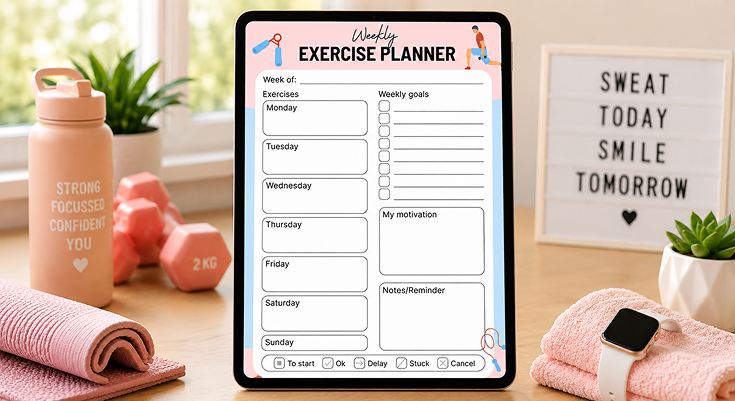
Stay consistent with your fitness routine using a flexible exercise planner template that’s perfect for tracking workouts, setting realistic goals, and maintaining motivation. Whether you’re managing your own progress or creating a plan for clients, this weekly exercise planner template supports a wide range of fitness needs—from personal training to at-home gym routines.
Building on this structure, you can easily customize your schedule using the intuitive weekly schedule maker. This adaptable fitness plan template empowers you to plan workouts efficiently, align them with your goals, and stay on track every step of the way.
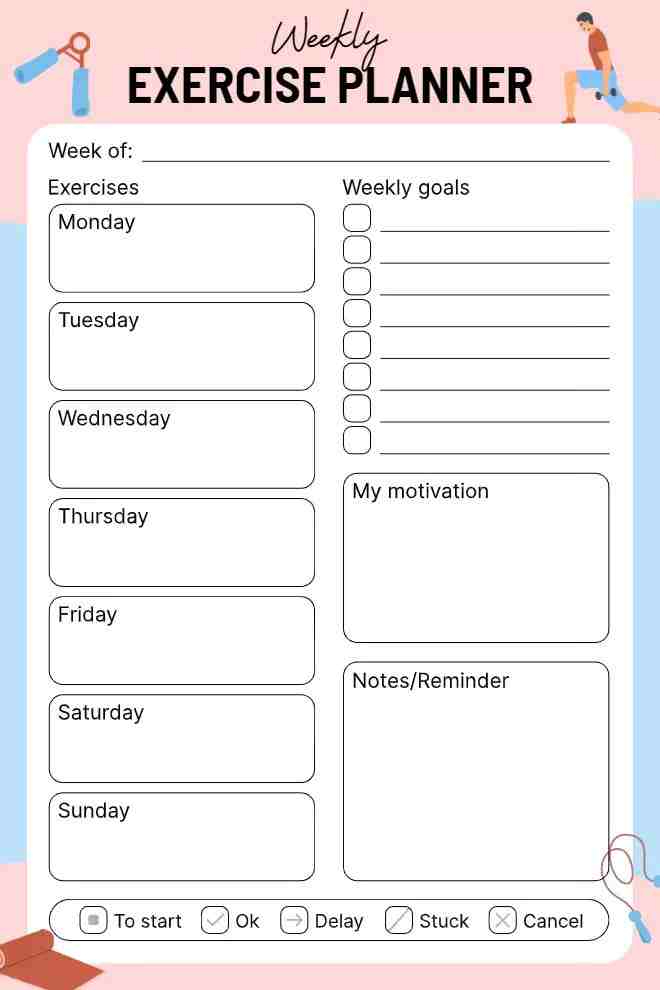
The playful weekly exercise planner template boasts a light, engaging aesthetic with soft pink and blue hues. A whimsical cartoon of an active figure enhances the cheerful theme. Daily exercise slots and a weekly goal checklist promote the organization. Motivation and note sections support sustained effort. Interactive progress buttons ensure user-friendly tracking.
How to Customize the Exercise Planner for Specific Fitness Goals
The playful exercise planner’s flexibility makes it ideal for any fitness goal, from weight loss to marathon training. By customizing the weekly schedule, exercise logs, and goal tracker, you can align the planner with your specific objectives. This ensures your workouts are targeted, efficient, and motivating, helping you stay focused on what matters most.
Steps to Customize the Planner for Your Goal
- Define Your Goal: Write a specific, measurable goal in the planner’s goal section (e.g., “lose 10 lbs in 3 months” or “complete a half-marathon”).
- Adjust the Weekly Schedule: Allocate workout types based on your goal (e.g., more cardio for endurance, strength for muscle gain).
- Tailor Exercise Logs: Add goal-specific metrics to track, like calories burned for weight loss or pace for running.
- Set Milestones: Break your goal into smaller weekly or monthly targets to track progress.
- Personalize Notes: Use the notes section for goal-relevant details, such as mood for mental health goals or soreness for recovery-focused plans.
Examples of Goal-Specific Customizations
Weight Loss
Schedule
4–5 days of mixed workouts:
Tracking
- Log calories burned
- Record workout intensity
- Track hunger levels
- Monitor dietary adherence
Milestone
Burn 500 extra calories weekly
Muscle Gain
Schedule
4 strength sessions weekly
Tracking
- Log repetitions
- Record sets
- Track weight increases
- Note muscle soreness
Milestone
Increase weight by 5% every 2 weeks
Marathon Training
Schedule
5 running days weekly:
Tracking
- Log distance
- Record pace
- Monitor heart rate
- Note energy levels
Milestone
Increase long run by 1 mile weekly
Customizing the planner ensures it becomes a personalized tool that supports your unique fitness journey. By aligning every element with your goal, you’ll maximize efficiency and motivation.
Tips for Creating an Effective Weekly Exercise Plan
A well-designed weekly exercise plan sets the foundation for fitness success. The exercise planner’s weekly schedule helps you organize workouts to balance intensity, variety, and recovery. These tips will guide you in creating a plan that’s sustainable, effective, and aligned with your lifestyle and goals.
Tips for an Effective Plan
- Balance Workout Types: Include cardio, strength, and flexibility workouts to improve overall fitness. For example, aim for 2-3 strength sessions, 2 cardio days, and 1-2 flexibility sessions weekly.
- Prioritize Rest Days: Schedule at least 1-2 rest or active recovery days (e.g., light yoga or walking) to prevent burnout and injury.
- Start with Realistic Goals: Plan workouts that match your current fitness level. Beginners might start with 3 workouts weekly, while advanced users can aim for 5-6.
- Vary Intensity: Mix high-intensity workouts (e.g., HIIT) with moderate ones (e.g., steady-state cardio) to optimize results and recovery.
- Plan Around Your Schedule: Slot workouts into times you’re most likely to stick to, like mornings for early risers or evenings for night owls.
By following these tips, you’ll create a weekly plan that’s balanced, achievable, and tailored to your needs, setting you up for long-term fitness success with the planner.
How to Track Progress and Measure Success with the Exercise Planner
Tracking your fitness progress is key to staying motivated and achieving your goals. The exercise planner’s logs allow you to record detailed workout data, helping you measure success over time. By consistently logging metrics and reviewing them weekly, you can identify patterns, celebrate milestones, and adjust your plan as needed.
Whether your goal is to build strength, improve endurance, or enhance flexibility, the planner provides a structured way to quantify your efforts and see tangible results.
Key Metrics to Track in the Exercise Logs
- Strength Training: Record reps, sets, weight lifted, and rest intervals to monitor progressive overload.
- Cardio: Log duration, distance, pace, or heart rate to track endurance improvements.
- Flexibility/Mobility: Note time spent on stretching or yoga and perceived ease of movement.
- Perceived Exertion: Use a 1-10 scale to rate workout intensity or fatigue, helping you balance effort and recovery.
- Consistency: Mark completed workouts to track adherence to your weekly schedule.
How to Review and Measure Success
Start by setting clear, measurable goals in the planner’s goal-tracking section, such as “increase bench press by 10 lbs in 8 weeks” or “run 5K in under 30 minutes.” Each week, review your logs to compare performance against these goals. Look for trends, like increasing weights or faster run times, and note areas needing improvement, such as skipped workouts or persistent fatigue.
Capture how you feel after workouts in the planner’s notes section to track recovery and motivation. For better organization and reflection, use a notes planner template to keep your observations clear and accessible.
Example: Tracking a Strength Goal
🎯 Goal
Deadlift 200 lbs in 12 weeks.
📅 Week 1
Workout: 3 sets of 5 reps at 150 lbs
Perceived Exertion: 7/10
📅 Week 4
Workout: 3 sets of 5 reps at 165 lbs
Perceived Exertion: Still around 7/10
Notes: Improved form, growing confidence
🏆 Week 12 Achievement
Lifted: 200 lbs successfully
Progress: Steady and measurable over time
Motivation: Increased thanks to visible results
Track weekly workouts while aligning them with long-term goals. Use a goal planner template to map out fitness milestones and keep your progress focused and consistent.
Regular tracking with the planner transforms vague fitness aspirations into concrete achievements. By logging and reviewing data, you’ll stay accountable and gain insights to refine your workouts, ensuring long-term success.
Which Design Elements Make This Weekly Exercise Planner Template Playful?
A well-designed exercise planner should not only serve as a tool for tracking workouts but also engage users and encourage consistency. The playful weekly exercise planner template incorporates several interactive and visually appealing elements to make fitness planning enjoyable. Here are the key design elements that contribute to its playful nature:
Whimsical Illustrations and Icons
Illustrations play a crucial role in making a planner feel lighthearted and enjoyable. This template includes fun, energetic cartoon-style figures performing various exercises. These visuals add an element of excitement, making workout planning more inviting and reducing the stress often associated with fitness tracking.
Interactive Progress Buttons
To keep users engaged, the planner features interactive checkboxes or progress buttons where they can tick off completed exercises. This small yet effective feature provides a sense of accomplishment, making it easier to stay motivated. By visually tracking progress, users feel more encouraged to remain consistent with their workouts.
Dedicated Motivation Section
Motivation is key to a successful fitness journey. This planner includes a dedicated section for motivational quotes and personal affirmations, helping users stay inspired throughout the week. Whether it’s a favorite fitness mantra or an uplifting message, this section reinforces positive thinking and encourages users to maintain a consistent exercise routine.
Customizable Goal-Tracking Space
Each individual has unique fitness goals, so flexibility is important. The playful weekly exercise planner template provides space for users to write down personal goals and track them daily or weekly. Having a clear visual representation of fitness targets enhances accountability and increases the likelihood of achieving them, keeping users dedicated to their progress.
Notes and Reminders Section
Sometimes, fitness planning involves more than just listing workouts. Users may want to jot down meal plans, progress notes, or upcoming challenges. This planner includes a dedicated section for tracking details, making it a reliable note planner for fitness consistency, helping users stay organized, motivated, and fully committed to their fitness journey.
How Soft Pastel Colors Enhance This Playful Weekly Exercise Planner Template?
Color psychology plays a vital role in design, influencing emotions and engagement levels. The playful weekly exercise planner template uses soft pastel shades—mainly pinks and blues—for a visually soothing experience. For a more detailed daily approach, the playful daily fitness planner template for workouts offers structured tracking, complementing the weekly planner for a complete fitness routine.
- Pastel Colors Promote a Sense of Calm: Bright and harsh colors can sometimes feel overwhelming, whereas pastels offer a gentle and soothing aesthetic. Soft pink and blue shades are known to reduce stress and promote a sense of relaxation, making users feel more at ease while planning their workouts.
- Enhances Focus and Creativity: Studies suggest that pastel colors enhance mental clarity and creativity. This means that users are more likely to engage with their planner consistently and thoughtfully, leading to better workout planning and goal achievement.
- Encourages a Positive Association with Fitness: Many people struggle with maintaining a consistent workout routine due to feelings of intimidation or burnout. A visually appealing planner with soft, inviting hues can help create a positive association with fitness planning, making users feel more inclined to stick to their schedules.
- Aligns with a Trendy, Modern Aesthetic: Pastel color palettes are widely popular in modern design trends. This planner’s aesthetic appeal makes it not just a practical tool but also a stylish one, increasing its desirability and usage.
Is This Playful Weekly Exercise Planner Template Ideal for Fitness Lovers?
Fitness enthusiasts often seek tools to stay organized, track progress, and stay motivated. The playful weekly exercise planner template offers numerous features for all fitness levels. For trainers, it’s also a great way to maximize productivity as a fitness coach with an iPad planner, streamlining workout plans and client progress tracking effortlessly.
Comprehensive Exercise Logs for Efficient Tracking
Tracking your fitness progress is key to achieving your goals. This planner provides structured exercise logs to help you record workout details efficiently. Log the type of exercise, duration, intensity, repetitions, sets, and distance covered. Stay organized, monitor improvements, and make informed adjustments to maximize results on your fitness journey.
- Type of exercise performed.
- Duration and intensity levels
- Repetitions and sets (for strength training)
- Distance covered (for cardio workouts)
Goal-Setting Sections for Motivation
Boost your motivation and stay accountable by setting realistic fitness goals. This planner’s weekly goal section helps you define short-term and long-term targets, daily workout objectives, and personal milestones like weight loss or muscle gain. Track progress effectively and stay committed to your fitness journey with structured goal-setting sections.
- Short-term and long-term fitness goals
- Specific daily workout objectives
- Personal milestones, such as weight loss or muscle gain targets
Flexible and Adaptable Layout
This planner’s adaptable layout suits all fitness routines, from HIIT and strength training to yoga and running. Its flexible design allows for personalized workout planning, ensuring users can tailor their schedules to fit their unique fitness goals. With the fitness exercise schedule planner template, effortlessly structure workouts to stay organized and maximize efficiency.
Encourages Habit Formation and Consistency
Building consistency is essential for long-term fitness success. This planner’s weekly tracking format encourages users to log workouts daily, helping to develop strong habits and reinforce commitment to their goals. By tracking progress regularly, users stay motivated and accountable, making it easier to maintain a steady and effective fitness routine.
Perfect for All Fitness Levels
Whether you’re a beginner, intermediate, or advanced fitness enthusiast, this planner provides a structured yet enjoyable way to manage workouts. Beginners can use it to establish a fitness routine, while experienced athletes can leverage it for advanced goal tracking and workout optimization.
Conclusion
The playful weekly exercise planner template blends style and function for a fun and effective fitness tracking experience. With whimsical design elements, soft pastel colors, and comprehensive goal-tracking sections. Whether you’re just starting your fitness journey or are an experienced fitness enthusiast, the PlanWiz planner app is designed to keep you motivated and on track to achieving your goals.
FAQs
A tool to plan workouts, track progress, and set goals. It organizes sessions, logs metrics, and keeps you motivated for fitness success.
It schedules workouts, tracks metrics like reps or pace, and sets goals to stay focused, motivated, and on track for results.
Beginners to pros with goals like weight loss or strength. It offers structure and tracking for any fitness journey.
Set a goal, schedule workouts, log metrics like time or weights, and review weekly to track progress and adjust plans.
Strength: Reps, sets, weights.
Cardio: Time, distance, pace.
Flexibility: Stretching time.
Effort: 1–10 scale.