Finding the right health planner template can simplify managing your fitness, wellness, and medical routines. Whether you’re tracking workouts or monitoring health goals, a well-designed, free printable weekly health planner template helps you stay organized and motivated on your journey to better well-being.
Using a weekly schedule maker can further streamline your schedule, making it easy to plan workouts, doctor visits, and self-care activities. This approach ensures you maintain balance and consistency, prioritizing your health effectively every week.

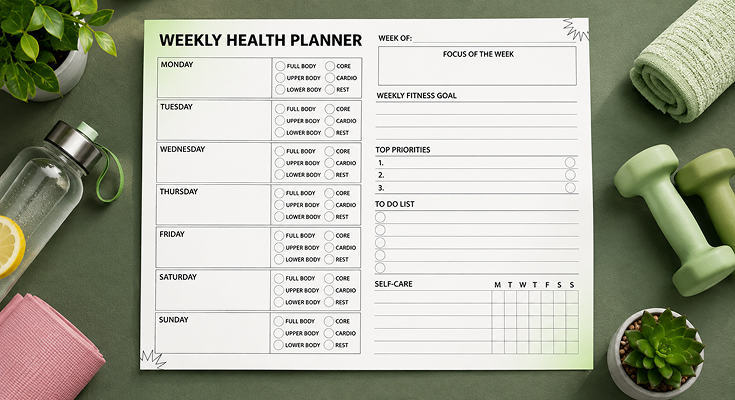
A simple weekly health planner template is designed for simplicity and efficiency. It includes clearly labeled sections for workouts, top priorities, and self-care tracking. The organized layout, with subtle green accents and easy-to-read fonts, promotes a structured yet calming approach to managing fitness and wellness goals throughout the week.
How Does Typography Impact This Simple Weekly Health Planner Template?
Typography plays a crucial role in the usability and effectiveness of a weekly health planner template. A well-selected font enhances readability, ensures clarity, and creates an intuitive flow for organizing health and self-care routines. Here’s how typography impacts a planner’s design and functionality:
Readability and Accessibility
- A clean, legible font ensures users can easily skim through their planner without strain.
- Choosing the right font size maintains clarity and avoids overcrowding.
- Sans-serif fonts, like Arial or Open Sans, are preferred for their simplicity and easy readability.
Hierarchy and Organization
- Bold and large fonts highlight essential sections, such as workouts, meals, and priorities.
- Italics and color differentiation help emphasize motivational quotes or reflections.
- Proper spacing between lines improves structure and reduces visual clutter.
Enhancing Motivation
- Aesthetic fonts and structured layouts make the planner more engaging.
- A well-designed typography system encourages users to maintain consistency.
- A combination of modern, minimal fonts creates a calming, motivational appeal.
How Can You Customize the Health Planner for Your Unique Needs?
A weekly health planner is like a map for your health journey, but everyone’s path is different. You can change the planner to match your life, goals, and needs. Customizing it makes it easier to stick with and more fun to use. Think about what you want to focus on, like eating better, moving more, or feeling calmer, and adjust the planner to help you get there.
Here are some ways to make the planner your own:
- Meal Planning: If you have special food needs, like avoiding sugar or eating vegetarian, add a section to plan meals that work for you. For example, write down quick breakfast ideas like oatmeal with fruit if you’re always in a rush. Try our meal planner template for easy meal ideas.
- Exercise Tracking: Choose activities you enjoy. If you love dancing, add “dance for 20 minutes” instead of “go to the gym.” If you’re new to exercise, start small, like a 10-minute walk. Use our exercise planner template to track your fitness goals.
- Self-Care Section: Add activities that make you happy or relaxed. For example, if you love reading, schedule 15 minutes to read a book. If you’re stressed, plan time for deep breathing or a warm bath.
Example: One lady wants to feel more energetic. She adds a section to track her water intake because she forgets to drink enough. She also schedules a 15-minute walk after dinner and 10 minutes of stretching to feel relaxed. Her planner now fits her busy life and helps her stay on track.
What Role Do Grid Lines Play in This Simple Weekly Health Planner Template?
Grid lines play a crucial role in a simple weekly health planner template by adding structure and clarity. They help organize schedules, track progress, and maintain consistency in health routines. With clearly defined sections, users can log workouts, meals, and self-care habits effortlessly, ensuring a well-balanced approach to fitness and overall wellness.
Improved Organization
Grid lines separate sections like daily goals, meals, and workout routines. They create structure, preventing information from appearing cluttered and unorganized. A well-structured layout keeps everything aligned and easy to track. Incorporating effective planner organization ideas for better health tracking further enhances usability. Users can quickly find and update entries without confusion.
Tracking Health Progress
Pre-defined grids simplify tracking water intake, sleep hours, and fitness routines. Users can log daily, weekly, and monthly health changes effortlessly. Clear divisions prevent overlapping priorities and reduce planning stress. Implementing effective time management tips for a self-care routine helps maintain consistency and accountability.
Enhancing Writing Clarity
Grids offer designated spaces for different entries, ensuring neat organization. They align writing properly, making entries easier to read later. Clear sections improve visibility, helping users scan information effortlessly. Organized writing enhances motivation and planning consistency. A structured layout ensures that users stay engaged with their health tracking.
Why Is Tracking Self-Care Activities Essential for Overall Wellness?
Self-care is about taking time to look after your mind, body, and feelings. It’s not just bubble baths or treats—it’s anything that helps you feel good and stay healthy. The self-care section in your planner helps you make time for these activities and track them so you don’t forget. Doing this can make you less stressed, happier, and stronger. Explore our self-care planner templates for more ways to prioritize your well-being.
Tracking self-care helps because:
- Reduces Stress: Activities like writing in a journal or listening to music can calm your mind. When you track them, you make sure they happen. Try our mindfulness journal templates for guided relaxation.
- Boosts Mood: Doing things you love, like painting or calling a friend, can make you smile. Seeing them in your planner reminds you to do them.
- Prevents Burnout: Taking breaks stops you from feeling too tired or overwhelmed. For example, a 5-minute stretch can refresh you.
- Builds Habits: When you track self-care, it becomes a regular part of your week, like brushing your teeth.
- Write three things you’re thankful for each day.
- Take a short walk in a park or your neighborhood.
- Watch a funny video or show for 15 minutes.
- Try a quick meditation using a free app.
Example: Jake feels stressed after school. He adds “listen to music for 10 minutes” to his planner’s self-care section. He tracks it daily and notices he feels calmer. Jake also adds “call Grandma” on Sundays, which makes him happy.
What Are the Benefits of Using a Weekly Health Planner Long-Term?
Using a weekly health planner for a long time can change your life for the better. It’s like planting a seed and watching it grow into a strong tree. By filling out your planner every week, you build healthy habits, stay organized, and feel proud of your progress. It helps you stay focused on your health and keeps you motivated.
Here are some long-term benefits:
- Better Habits: Planning meals or exercise helps you make healthy choices every day. For example, you might start eating more vegetables or walking regularly.
- More Energy: Tracking sleep or self-care can help you rest better, so you feel ready for the day. Check out our sleep journal templates to monitor your rest.
- Clear Goals: You can see what you’re working toward, like running a mile or feeling less stressed. This keeps you excited to keep going. Use our goal planner template to set and track your goals.
- Track Progress: Looking back at old weeks shows how far you’ve come. For example, you might notice you’re sleeping better or feeling stronger.
How to Stay Committed:
- Review your planner every Sunday to see what worked and what didn’t.
- Celebrate small wins, like finishing a week of workouts or trying a new healthy recipe.
- Keep your planner somewhere you can see it, like on your desk or fridge.
- If you miss a day, don’t worry—just start again the next day.
Example: Lisa started using her planner to drink more water and walk daily. After three months, she feels healthier and has more energy. She looks at her old plans and sees that she went from two walks a week to five. This makes her proud and keeps her going.
How Do Color Accents Improve This Simple Weekly Health Planner Template?
Color accents play a powerful role in designing a weekly health planner template. They influence mood, enhance engagement, and make planning a visually pleasing experience.
Boosting Focus and Motivation
- Using colors like green fosters a sense of calm and wellness.
- Bright accents help highlight key areas such as “Top Priorities” or “Meal Planning.”
- Consistent color use makes planners visually appealing and easy to navigate.
Enhancing Categorization
- Different colors for various sections help users quickly locate information.
- Example: green for self-care and fitness.
- The categorization method aids in memory recall and habit formation.
Encouraging Consistency
- A color-coded system makes tracking habits effortless.
- Subtle pastel tones create a calming, stress-free planning experience.
- When color accents are used thoughtfully, they can enhance daily motivation and engagement.
Conclusion
A simple weekly health planner template is a valuable tool for structuring self-care and fitness routines. By incorporating effective typography, grid layouts, and color accents, users can maintain clarity, motivation, and organization. Whether used digitally or in print, a well-designed PlanWiz planner app encourages consistent self-improvement, making it easier to stay on top of health goals and overall wellness.
FAQs
A weekly health planner is a tool to organize your health goals. It helps you plan meals, track exercise, schedule self-care, and set goals for the week.
Pick a planner template, write down your health goals, and fill in sections like meals, workouts, and self-care activities for each day of the week.
It keeps you organized, helps you build healthy habits, and makes it easier to stick to goals like eating better or exercising more.
Yes! Start with small goals, like drinking more water or walking 10 minutes a day, and add more as you get comfortable.
Try it for at least 4-6 weeks. Small changes, like eating more vegetables or sleeping better, can show results over time.