
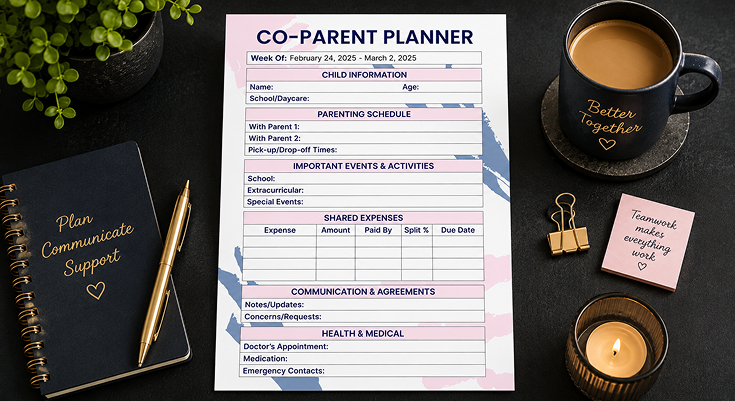
Co-parenting brings challenges like scheduling clashes and miscommunication, parenting journal template simplifies the process. This intuitive tool, designed as a reliable weekly schedule maker, organizes routines, aligns both parents, and enhances communication. With a customizable planner template, tailor schedules effortlessly, ensuring clarity, reducing stress, and enabling harmonious, collaborative parenting.
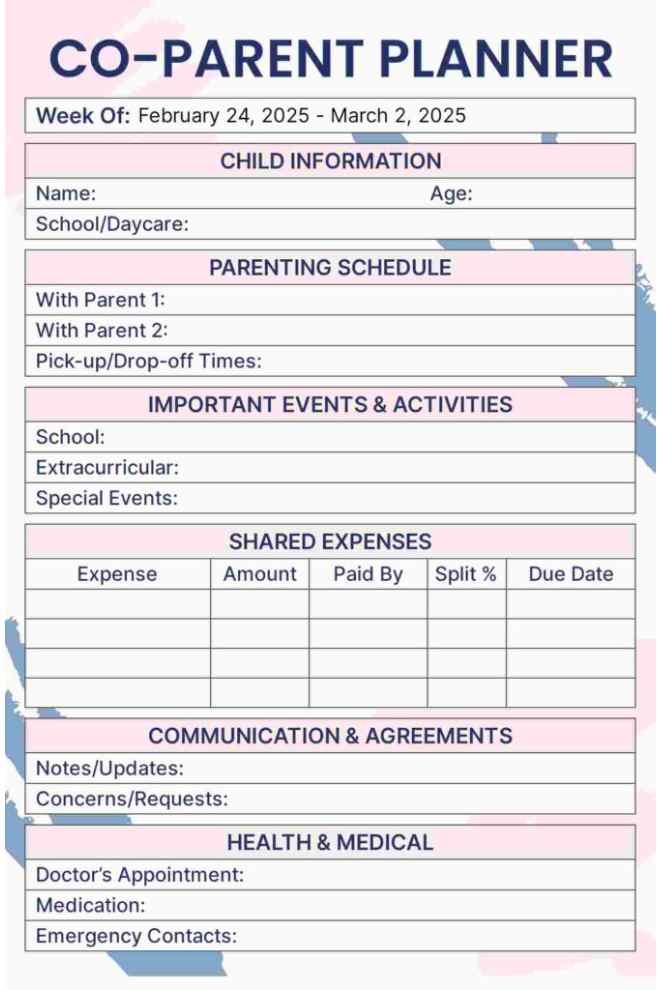
Co-parenting needs clear communication and organization. This weekly planner template helps parents coordinate schedules, track events, and manage shared responsibilities. With sections for parenting plans, child information, and expenses, it keeps both parents aligned. Its structured layout ensures smooth routines, making co-parenting more organized and stress-free.
This planner fosters communication with sections for notes, concerns, and agreements. The health section keeps medical details and emergency contacts accessible. It helps co-parents stay organized and create a supportive environment. For even greater coordination across the entire household, the integrated family planner template offers features that streamline daily routines, track shared responsibilities, and promote collaboration among all family members.
Why is a Weekly Co-Parent Planner Template Essential?
A well-designed weekly co-parent planner template is more than just a schedule—it’s a powerful communication tool that provides structure, clarity, and predictability in a child’s life. Here’s why it’s indispensable:
Maintaining Consistency and Communication
Children thrive on routine and stability, making clear scheduling essential for co-parenting success. A consistent weekly plan fosters predictability and reassurance, helping children adapt smoothly to transitions between households.
Minimizing Conflicts and Misunderstandings
Miscommunication is a common source of co-parenting disputes. A shared planner acts as a neutral reference, keeping responsibilities clear. This consistent record promotes transparency and accountability, ensuring both parents have equal access to scheduling details.
Enhancing the Child’s Sense of Stability
A predictable routine helps children feel more secure, reducing stress and uncertainty. It also establishes consistent daily patterns that nurture emotional resilience and foster a sense of stability in their lives.
By integrating a weekly co-parent planner template into daily life, parents can reduce stress, improve communication, and create a stable environment where their child can thrive. Discover how our daily planning made easy for parents approach can further simplify scheduling, ensuring a smoother co-parenting experience every day.
What Key Features Should You Look for in a Weekly Co-Parent Planner Template?
To maximize the benefits of a weekly co-parent planner template, consider the following essential features:
Shared Calendar and Scheduling Flexibility
A good planner should provide real-time access and easy updates for both parents. This ensures that any schedule changes are instantly visible, promoting transparency and reducing the potential for miscommunication. Explore a variety of schedule planner templates for additional scheduling options tailored to your needs.
Why It’s Important:
- Ensures Both Parents Stay Informed – Reduces miscommunication and scheduling conflicts.
- Syncs Across Devices – Digital planners allow instant updates and mobile notifications.
- Printable Options for Quick Reference – A physical copy can be helpful for caregivers and older children.
💡 Tip: A weekly co-parent planner app with shared calendar functionality makes scheduling seamless.
Communication Notes Section
A designated space for notes fosters clear and organized communication between co-parents. It allows both parties to jot down important updates, reminders, or special instructions, ensuring that critical information is shared and easily accessible. The notes planner templates provide additional formats for structured communication.
Best Uses:
- Share Important Updates – Medical visits, school projects, or behavioral changes.
- Discuss Scheduling Adjustments – Record any proposed changes to avoid confusion.
- Provide Child-Specific Details – Include reminders about allergies, medications, or routines.
Special Events and Appointments
Tracking key milestones and activities ensures that both parents are actively involved. It highlights essential moments in the child’s life and encourages collaboration, allowing each parent to celebrate achievements and support their child’s development together.
What to Include:
- Birthdays & Holidays – Coordinate celebrations and gift planning.
- School Functions & Parent-Teacher Meetings – Ensure that both parents can attend important academic events.
- Extracurricular Activities – Manage sports practices, recitals, or club meetings efficiently.
💡 Tip: Color-code events for quick visibility of responsibilities.
Customization Options
Since every co-parenting arrangement is unique, a planner should be adaptable. Customizable sections like adjustable layouts and flexible note fields help accommodate different schedules and responsibilities, ensuring the planner works effectively for every family.
Customizable Features to Look For:
- Flexible Layouts – Choose between daily, weekly, or monthly views.
- Additional Notes Sections – Add areas for budgeting, to-do lists, or co-parenting agreements.
- Color-Coding Responsibilities – Assign colors to different types of tasks for quick identification.
By choosing a weekly co-parent planner template with these features, parents can ensure better organization, clearer communication, and a smoother co-parenting experience.
What Are the Benefits of Using a Weekly Co-Parent Planner Template?
Implementing a weekly co-parent planner template provides numerous advantages, helping parents coordinate schedules efficiently while ensuring a stable routine for their child. It also serves as an effective weekly schedule maker, streamlining planning and fostering smoother communication between co-parents.
Improved Time Management and Organization
A structured planner eliminates last-minute scheduling conflicts and ensures smoother daily routines, offering time-saving tips for stress-free co-parenting. It helps parents visualize upcoming events and plan proactively, reducing overall stress.
Key Benefits:
- Clear Schedule Visibility – Both parents know their responsibilities in advance.
- Avoids Overlaps & Missed Commitments – Reduces confusion about pickups, drop-offs, and special events.
- Efficient Planning for Activities – Helps schedule extracurriculars, doctor’s appointments, and school events without conflicts.
Enhanced Communication Between Co-Parents
A planner serves as a centralized communication tool, reducing the need for excessive back-and-forth discussions. It keeps both parents updated on schedules and responsibilities, fostering transparency and accountability.
How It Helps:
- Minimizes Misinterpretations – Clearly outlines custody arrangements and responsibilities.
- Reduce Unnecessary Calls & Texts – Parents can check the planner instead of constantly coordinating via messages.
- Encourages Accountability – Both parents stay informed about their commitments and obligations.
Reduced Stress and Improved Co-Parenting Relationship
A well-maintained schedule promotes peaceful and cooperative parenting. It fosters clarity and consistency, ensuring both parents are aligned in their commitments.
Why It Works:
- Fewer Last-Minute Disruptions – Predictability reduces stress for both parents.
- Promotes Fairness & Balance – Helps divide parenting duties equitably.
- Encourages a Positive Co-Parenting Dynamic – Prevents unnecessary arguments and promotes mutual respect.
Child-Centered Planning
Keeping the child’s well-being as the focus ensures consistency and stability in their life. This emphasis on routine helps create a nurturing environment that supports their overall growth and emotional security.
Key Advantages:
- Maintains a Stable Routine – Helps children feel secure with a predictable schedule.
- Ensures Both Parents Stay Involved – Allows equal participation in the child’s life.
- Tracks Important Milestones – Records school progress, medical visits, and extracurricular achievements.
Using a weekly co-parent planner template helps parents stay organized, reduces stress, and ensures a smooth co-parenting experience while prioritizing their child’s best interests.
How Can You Effectively Use a Weekly Co-Parent Planner Template?
To make the most of a weekly co-parent planner template, follow these best practices for smooth scheduling and communication.
Collaborative Setup and Planning
A planner is most effective when both parents actively participate in its setup and maintenance. This collaborative effort ensures that all commitments are shared, paving the way for smoother transitions and minimizing potential misunderstandings.
Best Practices:
- Discuss Key Commitments Together – Include school schedules, extracurricular activities, medical appointments, and holidays.
- Set Clear Expectations – Define responsibilities like pickup/drop-off times, meal planning, and weekend visits.
- Ensure Fair Division of Time – Balance parenting time to maintain a positive co-parenting dynamic.
Regular Updates and Reviews
Schedules evolve, and keeping the planner up to date ensures accuracy. Regular reviews help both parents stay informed, adapt to changes, and avoid potential scheduling conflicts.
Tips for Consistency:
- Schedule a Weekly Check-In – Review the upcoming week to confirm plans and address potential conflicts.
- Use Color-Coding or Labels – Differentiate responsibilities (e.g., school, medical, extracurricular) for clarity.
- Account for Unexpected Changes – Plan buffer times for emergencies or last-minute schedule shifts.
Digital Tools and Printable Templates
Planning is easier when you use a format that works best for you. Some parents like digital tools, while others prefer using printable planner templates. Choosing the right format helps both parents stay organized and keep track of important updates.
Choosing the Right Option:
- Digital Co-Parent Planners – Ideal for real-time updates, shared access, and automated reminders. A weekly co-parent planner app can simplify coordination.
- Printable Planner Templates – These are Great for those who prefer a tangible reference on the fridge or in a binder.
- Hybrid Approach – Combine both formats by updating digitally and printing a weekly overview for easy reference.
By following these strategies, parents can maximize the effectiveness of their weekly co-parent planner template, ensuring smooth coordination and a stress-free co-parenting experience.
What Are the Best Tips for Successful Co-Parenting Using a Weekly Planner Template?
To maximize efficiency and effectiveness, keep these key tips in mind when using a weekly co-parent planner template:
Consistent Communication
Regular check-ins ensure that both parents stay aligned and avoid misunderstandings. They also offer a timely opportunity to review and adjust plans, keeping communication proactive and effective. The mom planner template can be particularly useful for mothers managing co-parenting responsibilities.
Best Practices:
- Review the Planner Weekly – Go over the schedule to confirm plans and address any concerns.
- Use a Shared Digital Platform – A weekly co-parent planner app allows instant updates and reduces miscommunication.
- Set Communication Boundaries – Establish when and how to discuss schedule changes to avoid unnecessary conflicts.
Flexibility and Compromise
Unexpected events can arise, so maintaining a flexible mindset is key. Embracing adaptability helps adjust plans smoothly and keeps the schedule on track.
How to Adapt Smoothly:
- Plan for Emergencies – Have backup options for childcare or unexpected changes.
- Respect Each Other’s Time – If a last-minute change is needed, communicate respectfully and find a solution together.
- Stay Child-Focused – Decisions should always be in the best interest of the child, not personal convenience.
Focusing on the Child’s Needs
Every schedule adjustment should prioritize the child’s stability, health, and happiness. By keeping their needs at the forefront, co-parents create a nurturing environment that supports the child’s growth and fosters long-term well-being.
Ways to Ensure Child-Centered Planning:
- Balance School, Play, and Rest – Include time for homework, activities, and relaxation.
- Ensure Consistency Between Homes – Maintain similar routines to provide a sense of stability.
- Consider the Child’s Input – If they’re old enough, involve them in planning their weekly activities.
By following these tips, co-parents can create a structured, stress-free schedule that benefits everyone while keeping the child’s well-being the top priority.
What Are the Common Mistakes to Avoid When Using a Co-Parent Planner Template?
To ensure a smooth co-parenting experience, be mindful of these common mistakes when using a weekly co-parent planner template:
- Lack of Communication or Updates: Failing to update the planner can cause missed responsibilities and unnecessary conflicts. Regularly refreshing your schedule fosters accountability and keeps both parents aligned, preventing avoidable issues.
- Overcomplicating the Planner: A planner should make co-parenting easier, not more stressful. It should simplify scheduling and communication, ensuring that both parents are aligned and that unexpected changes can be managed efficiently.
- Ignoring Customization Needs: Every family’s co-parenting arrangement is unique, so a one-size-fits-all approach may not work. Customizing your planner ensures that your family’s specific scheduling needs and responsibilities are accurately reflected, leading to a more effective and personalized tool.
By avoiding these mistakes, parents can maximize the effectiveness of their weekly co-parent planner template, ensuring smooth coordination and a stress-free experience for everyone involved.
Conclusion
A weekly co-parent planner template fosters better coordination, reduces stress, and enhances child stability by keeping schedules organized and communication clear. Consider using a planner like the PlanWiz planner app to cut conflicts, streamline time management, and create an environment where your child can thrive.
FAQs
A tool that helps co-parents organize schedules, track responsibilities, and maintain clear communication to ensure a stable routine for their child.
It fosters consistency, reduces conflicts, and enhances child stability by providing a structured schedule and communication platform.
It offers shared calendars, notes sections, and real-time updates to keep both parents informed and aligned on responsibilities.
Shared calendars, customizable layouts, notes sections, and event tracking for school and extracurricular activities.
Yes, by clearly defining responsibilities and providing visibility into each parent’s commitments, it minimizes overlaps and misunderstandings.