
Customer service is a cornerstone of any successful business, directly influencing customer satisfaction, loyalty, and overall brand perception. A weekly planner app plays a crucial role in managing customer service operations efficiently. With fluctuating demands, varying shift requirements, and diverse team structures, managing service hours, especially in remote and hybrid teams, can be a significant challenge. This is where a planwiz planner app becomes an essential tool, helping managers optimize shifts, improve performance, and meet customer needs effectively.
The Challenges of Managing Customer Service Hours
Managing customer service hours is not just about tracking time—it’s about ensuring the right resources are available at the right times. Here are some common challenges:
- Fluctuating Customer Demand: Customer service teams face unpredictable workloads. Peaks during holidays, product launches, or unexpected issues can leave staff overworked, while downtimes might result in wasted resources.
- Scheduling Conflicts: With multiple shifts, time zone differences, and varying employee preferences, creating schedules that work for everyone becomes a complex puzzle.
- Inconsistent Service Levels: Without a well-organized schedule, some customer service representatives may be underutilized while others might face burnout from overwork, leading to inconsistent service levels and longer wait times.
- Managing Remote & Hybrid Teams: With many customer service teams operating remotely or in hybrid models, communication gaps and lack of visibility into who is available can hinder effective management.
- Tracking and Reporting Performance: Without a central system, it’s difficult to measure employee performance, adherence to schedules, and overall customer service efficiency.
Why Use a Weekly Planner App for Customer Service?
In the fast-paced world of customer service, managing schedules effectively is critical to ensure service levels are maintained and customer needs are met promptly. A weekly planner app is a powerful tool that simplifies and optimizes the management of customer service hours. Here’s a more detailed look at why it’s an indispensable asset for customer service teams:
Streamlined Scheduling: Centralized and Efficient
An application that functions as a weekly planner helps simplify scheduling challenges through a centralized approach. Tools and spreadsheets become obsolete when all scheduling information resides under one interface which delivers a complete view of daily staffing assignments. This streamlining leads to several benefits:
- Quick Shift Assignments: With a few clicks, managers can assign shifts to employees based on availability, workload distribution, and skill sets, which is especially useful for teams that have specific areas of expertise.
- Easy Adjustments: Customer service demand can fluctuate unexpectedly due to spikes in queries, emergencies, or seasonal changes. A weekly planner app allows for quick and efficient adjustments in real time, ensuring that there is no delay in covering shifts. Whether it’s shifting hours, swapping shifts between employees, or filling in last-minute gaps, the app makes these changes seamless.
- Automated Reminders & Notifications: The app can send automatic reminders to employees about upcoming shifts or changes in their schedules. This helps reduce confusion, prevents missed shifts, and ensures that everyone stays on top of their responsibilities.
- Conflict Resolution: By having a clear, visual representation of the schedule, the app helps prevent common scheduling conflicts such as double bookings, overlapping shifts, or under-staffed periods. This reduces errors and enhances the smooth running of operations.
Real-Time Availability: Always Know Who’s Available
Understanding employee availability at each moment represents a vital operational need for customer service team oversight particularly when employees operate remotely or in hybrid conditions. Through a weekly planner app, the organization can view employee availability which promotes clearer scheduling and more efficient operational planning.
- Employee Self-Management: Many apps offer self-service features where employees can set their availability, request time off, or indicate preferred working hours. This empowers the team to manage their schedules proactively, reducing the administrative burden on managers.
- Dynamic Availability Updates: As employees’ availability changes—whether due to personal reasons, unexpected leave, or new commitments—the app instantly reflects these updates, giving managers the most current and accurate data. This makes it much easier to fill gaps and avoid situations where shifts are left unfilled.
- Remote Team Tracking: In remote or hybrid teams, where employees may be working in different time zones, keeping track of who’s working when can be difficult. With real-time availability tracking, managers can coordinate shifts across time zones and ensure that customer queries are always addressed promptly, without confusion.
- Leave Management: By integrating time-off requests directly into the planner app, managers can track vacation days, sick leave, and personal time off. This visibility helps in forecasting resource needs and ensuring that there’s no disruption in service due to unplanned absences.
Better Forecasting: Plan for Demand
Proper forecasting serves to help avoid problems stemming from staffing deficiencies because these issues create situations of either too many or too few employees which results in decreased efficiency and revenue shortfalls and unhappy staff. The forecasting function within an advanced weekly planner app enables managers to use data to anticipate customer service needs thus ensuring proper staffing throughout the week.
- Data-Driven Insights: Many planner apps integrate with CRM and customer service platforms, pulling data on past customer inquiries, peak times, product launches, marketing events, or even seasonal demand. By analyzing this historical data, the app can forecast future demand trends, allowing managers to schedule resources effectively in advance.
- Intelligent Scheduling: Some planner apps utilize AI algorithms to predict customer service demand based on various factors such as past trends, marketing activities, or even weather. This predictive capability helps managers anticipate peak times and adjust staffing levels proactively, avoiding understaffing during high-demand periods and overstaffing during quieter hours.
- Flexible Resource Allocation: The app not only helps with forecasting but also with distributing the workload efficiently. For instance, if demand increases unexpectedly, managers can quickly call in additional staff or adjust shifts without waiting until after the fact.
- Scenario Simulations: In more sophisticated apps, managers can input different “what-if” scenarios to assess how changing circumstances (e.g., a sudden increase in support tickets) would impact service levels and team capacity. This allows for better preparation and smarter decision-making when the unexpected happens.
Enhanced Collaboration: Aligning Teams and Communication
New term definitions coupled with tight schedules and high pressure define how the success of customer service teams operates. A weekly planner app fosters collaboration in several key ways:
- Shared Calendars: With a shared calendar, every team member has visibility into the schedules of their colleagues, allowing them to collaborate more efficiently and coordinate shift changes or task handovers seamlessly. This visibility ensures that everyone is aware of who’s on shift, who’s off, and who needs to take over specific customer issues.
- Group Communication Features: Many planner apps have built-in communication tools or integrate with popular messaging platforms like Slack or Microsoft Teams, enabling team members to discuss shift changes, customer service strategies, or any immediate issues. This centralized communication minimizes the risk of miscommunication or missed updates.
- Collaborative Shift Swaps: With a planner app, employees can request and offer shift swaps in a structured and transparent way. Instead of relying on informal communication (which can lead to confusion), the app allows for formal requests and approvals, ensuring that shifts are always properly covered.
- Team Engagement: The app can offer features like shift feedback, recognition tools, and performance tracking, helping to keep everyone motivated and aligned on common goals. This is particularly important for remote teams, where in-person communication is limited.
Reduced Errors & Time-Saving: Automation and Efficiency
As one of a manager’s most precious resources time, weekly planner app streamline operations and decrease mistakes through automated procedures.
- Automated Shift Rotations: In environments where employees follow set shift rotations (such as alternating between day and night shifts), a planner app can automate these schedules. This reduces the risk of human error when manually creating shifts and ensures consistency in work schedules.
- Automatic Compliance Checks: Many apps also have built-in compliance features that help ensure legal requirements regarding working hours, overtime, and rest periods are met. This reduces the risk of violations and the associated fines or legal issues.
- Efficient Holiday Scheduling: Planning for holidays or busy seasons can be challenging, but a weekly planner app can streamline this process by automating holiday schedules. Employees can easily request time off, and managers can quickly see when additional coverage is needed. Then the manager ensure service continuity during peak periods.
- Instant Reporting: With automated reporting features, managers can instantly generate insights on scheduling efficiency, attendance, performance, and team productivity. This cuts down on manual reporting efforts and provides immediate access to data needed for decision-making.
- Reduction of Manual Work: Instead of dealing with spreadsheets or fragmented scheduling systems, the app consolidates all scheduling, availability tracking, and communication in one platform. This time-saving efficiency allows managers to focus on customer service performance and strategy rather than administrative tasks.
Forecasting for Optimal Customer Service Metrics Using Weekly Planner
The management of variable demand requires accurate forecasting to support customer service operational success. Historical data from call volume and response times combined with analysis. That allows this app to generate weekly projections of peak service demand periods. The app identifies patterns to assist managers with agent staffing levels. That also, support peak demand periods thus maintaining operational efficiency and meeting service targets.
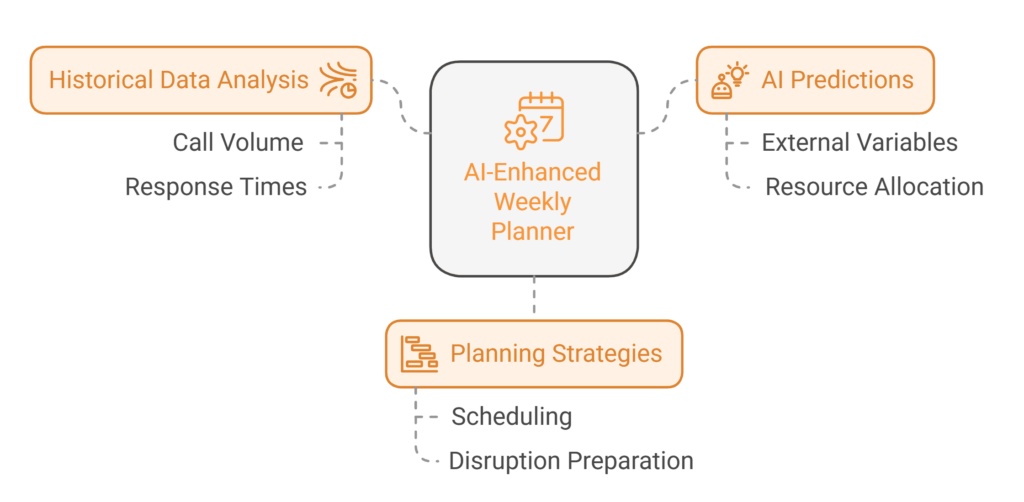
AI-enhanced weekly planner apps improve forecasting by integrating external variables like marketing campaigns or product launches. AI predictions help managers allocate resources efficiently. Planning organization ideas, like scheduling around demand peaks and preparing for disruptions, ensures optimal coverage and service quality. These strategies, combined with AI-driven insights, allow managers to maintain consistent and reliable customer service.
Key Metrics to Track for Optimizing Customer Service Performance
A weekly planner app provides more than just scheduling functionality. By integrating performance metrics, it can be used to optimize customer service delivery. Here are key metrics to track:
- Response Time: A core metric for measuring customer service effectiveness. Response time tracks how quickly a representative answers a customer query. Using the weekly planner’s data, managers can assess if adequate coverage is in place during peak times to maintain quick responses.
- Customer Satisfaction Scores (CSAT): This metric is tied directly to service hours and can help identify trends. If CSAT scores dip during certain hours or shifts, managers can use the weekly planner app to reassign resources or adjust schedules to improve performance.
- Agent Availability vs. Customer Demand: The app can track how many agents are available at any given time and compare that to the volume of customer queries. This helps identify any gaps in coverage and allows for adjustments before service quality suffers.
- Service Level Agreements (SLAs): Tracking SLAs ensures that agents respond within the promised time frames. If service hours aren’t properly managed, SLAs can be breached, resulting in dissatisfied customers.
- First Contact Resolution Rate (FCR): This metric tracks the percentage of customer issues resolved on the first interaction. Using the planner app, managers can track how effectively shifts are staffed to optimize the number of qualified agents available for each issue type.
- Employee Utilization: Tracking agent productivity is essential. The app can report on individual performance, helping managers identify high performers and those who may need additional training or support.
Flexibility in Customer Service Management
Flexibility is a fundamental component of an efficient and healthy customer service operation. In today’s dynamic business environment, customer service needs are constantly changing, requiring teams to adapt quickly to shifting demands. The ability to adjust schedules in real time is crucial for maintaining service levels and employee satisfaction. A weekly planner app provides several ways to maintain this flexibility:
Dynamic Shift Changes for Adapting to Shifting Needs
Customer service demands can change unexpectedly, requiring quick adjustments. A flexible weekly planner app makes it easy to swap shifts between agents, adjust break times, or rearrange schedules on the fly to accommodate sudden spikes in demand. This flexibility ensures that teams can respond quickly without compromising service levels.
Employee Preferences for Better Job Satisfaction
In remote or hybrid work environments, employees often prefer more flexibility in their schedules. A weekly planner app allows agents to submit their preferred hours or availability, which can improve job satisfaction and reduce turnover. This personalized approach fosters a better work-life balance and increases overall employee retention.
Handling Emergencies with Ease
Unforeseen events like sickness or personal emergencies can disrupt customer service operations. Flexible scheduling features in a planner app allow managers to quickly reallocate resources, offer shift coverage, or adjust staffing levels. That ensures service continues uninterrupted, even during emergencies. This ensures minimal disruption to customer service availability.
Balancing Part-Time and Full-Time Staff for Optimal Coverage
Flexible scheduling helps integrate part-time and full-time staff based on demand. With part-time employees covering peak hours and full-time agents handling quieter times. To maximize efficiency, time management tips can play a crucial role. By prioritizing tasks and optimizing shifts, teams can maintain balance, reduce overstaffing, and enhance customer service without overburdening staff.
Manage Remote & Hybrid Customer Service Teams with a Weekly Planner App
Managing remote and hybrid teams introduces additional complexities, but a weekly planner app can help streamline the process:

- Centralized Scheduling: A planner app can handle scheduling across multiple locations and time zones, giving managers a unified view of who is working and when.
- Time Zone Adjustments: In hybrid teams, agents may be spread across various regions. A weekly planner app can adjust schedules automatically based on time zones, ensuring no overlap or underlap in coverage.
- Tracking Remote Availability: A key challenge for remote teams is tracking when employees are available to work. A planner app allows employees to mark their availability, and managers can track these in real time, reducing communication delays.
- Collaboration Tools: Communication is vital for remote and hybrid teams. Many planner apps integrate with communication tools like planwiz, Slack, or Microsoft Teams, allowing managers and employees to stay in the loop regarding any last-minute changes or updates.
- Employee Well-Being: By using the weekly planner to distribute workloads and ensure reasonable working hours evenly. Managers can promote a healthy work-life balance, reducing the risk of burnout in remote teams.
The Impact of Poorly Managed Customer Service Hours
When customer service hours aren’t managed properly, the consequences can be far-reaching:
- Customer Dissatisfaction: If service agents aren’t available during peak times, customers may face long wait times or get poor responses, leading to frustration and a negative customer experience.
- Employee Burnout: Poor scheduling can lead to understaffing or overworking agents, resulting in burnout, increased absenteeism, and turnover.
- Decreased Productivity: Productivity can drop if customer service representatives are overburdened or underutilized. Overworked agents may be less efficient, while underutilized ones may become disengaged.
- Missed Opportunities: Without proper forecasting and scheduling, businesses may miss critical opportunities to improve service levels during high-demand periods. But it affecting customer retention and brand reputation.
- Loss of Revenue: Poor service due to ineffective scheduling directly impacts a company’s bottom line. It is especially in businesses where customer satisfaction and quick resolutions are crucial for repeat business.
Conclusion
Proper coordination of customer service operational times creates essential conditions for both customer contentment and staff welfare. Through a weekly planner application, users access efficient scheduling capabilities, such as weekly planner templates, to predict and adjust staffing for peak hours. The tracking system allows businesses to monitor performance indicators, enhance team collaboration, and reduce burnout. This results in improved service quality, fewer errors, and superior business outcomes.